


What is a Career Plateau?
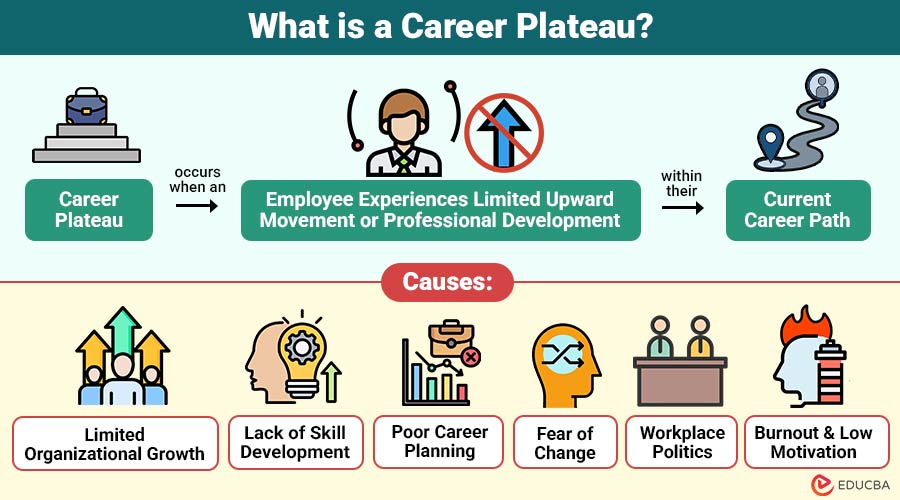
A career plateau occurs when an employee experiences limited upward movement or professional development within their current career path. It may involve stagnation in promotions, compensation, responsibilities, or learning opportunities.
For example, an employee may remain in the same role for several years without receiving additional responsibilities or opportunities for advancement. Even highly skilled workers can feel trapped if they are no longer challenged or recognized.
Career plateaus are not always related to poor performance. Sometimes organizations have flat structures with limited managerial positions, making advancement difficult even for high-performing employees.
Table of Contents:
- Meaning
- Types
- Causes
- Signs
- Effects
- How to Overcome a Career Plateau?
- Role of Employers in Managing Career Plateaus
- Real-World Examples
- Advantages
- Challenges
Key Takeaways:
- A career plateau occurs when professional growth and advancement slow or stop temporarily.
- Employees can overcome stagnation by learning new skills, networking, seeking feedback, and taking the initiative.
- Career plateaus reduce motivation, productivity, and engagement and may significantly increase employee turnover rates.
- Career transitions may become necessary when growth opportunities are no longer available within.
Types of Career Plateaus
Here are the main types of career plateaus that explain different ways professional growth can slow or feel limited in a career.
1. Structural Plateau
A structural plateau occurs when there are limited opportunities for promotion within an organization. This often occurs in companies with fewer management positions or highly competitive leadership roles.
2. Content Plateau
A content plateau occurs when employees no longer feel challenged by their work. Daily tasks become repetitive, reducing enthusiasm and creativity.
3. Life Plateau
A life plateau is connected to personal goals and work-life balance. Employees may lose motivation when their careers no longer align with their personal aspirations or lifestyle preferences.
4. Salary Plateau
A salary plateau occurs when income growth slows or stops despite years of experience and performance improvements.
Causes of a Career Plateau
Several factors can contribute to career stagnation.
1. Limited Organizational Growth
Flat organizational structures often provide limited promotion opportunities, slowing employee advancement and long-term professional career progression.
2. Lack of Skill Development
Failing to update professional skills reduces competitiveness and adaptability within rapidly evolving industries and changing workplace demands.
3. Poor Career Planning
Employees without clear long-term career goals often struggle identifying opportunities for advancement and professional growth effectively.
4. Fear of Change
Avoiding career risks, new responsibilities, or industry transitions can limit professional development and future advancement opportunities.
5. Workplace Politics
Bias, favoritism, and unhealthy organizational cultures sometimes restrict fair promotions, recognition, and professional career advancement opportunities.
6. Burnout and Low Motivation
Excessive stress and workload reduce enthusiasm, productivity, engagement, and motivation for pursuing career advancement opportunities successfully.
Signs You Are Experiencing a Career Plateau
Recognizing early warning signs helps professionals take corrective action sooner.
1. Feeling Unchallenged
Daily tasks become repetitive, consistently reducing creativity, enthusiasm, learning opportunities, and overall professional engagement at work.
2. Lack of Promotions
Consistent performance without promotions over several years may indicate limited opportunities for career growth and advancement within organizations.
3. Reduced Motivation
Employees gradually lose excitement, passion, and energy for work responsibilities, projects, and long-term professional goals.
4. Limited Learning Opportunities
Few opportunities for training, skill development, or meaningful projects can significantly restrict professional growth and career advancement.
5. Declining Productivity
Boredom, frustration, and a lack of motivation may negatively impact efficiency, focus, productivity, and overall workplace performance.
6. Feeling Undervalued
Employees may consistently feel that their contributions, achievements, and efforts are overlooked, underappreciated, or insufficiently rewarded by management.
7. Increased Job Dissatisfaction
Frequent frustration, disengagement, and thoughts of quitting often indicate career stagnation and declining workplace satisfaction.
Effects of a Career Plateau
Career plateaus can affect both employees and organizations.
Effects on Employees:
1. Lower Job Satisfaction
Employees may feel unhappy, disconnected, and less fulfilled in their daily responsibilities and overall long-term career progress.
2. Reduced Confidence
Career stagnation often lowers self-confidence, making employees doubt their abilities, performance, and future professional growth opportunities.
3. Increased Stress and Frustration
Limited advancement opportunities can create frustration, anxiety, stress, and dissatisfaction within professional and personal life environments.
4. Loss of Motivation
Employees gradually lose enthusiasm, commitment, and interest in completing tasks or actively pursuing career development opportunities.
5. Burnout and Emotional Exhaustion
Continuous stress and repetitive work responsibilities may lead employees toward burnout and emotional exhaustion over extended periods.
Effects on Organizations:
1. Reduced Employee Engagement
Disengaged employees contribute less enthusiasm, creativity, collaboration, and commitment to organizational goals and overall workplace success.
2. Lower Productivity
Career stagnation often significantly reduces employee efficiency, focus, performance quality, and overall productivity within workplace operations.
3. Increased Absenteeism
Unmotivated employees may take frequent leaves, increasing absenteeism and negatively affecting organizational workflow and team performance.
4. Higher Turnover Rates
Employees experiencing stagnation often seek better career opportunities elsewhere, increasing organizational turnover and recruitment costs significantly.
5. Loss of Experienced Talent
Organizations may lose highly skilled, experienced employees seeking professional growth and better advancement opportunities in competitive industries.
6. Negative Workplace Morale
Career stagnation can create dissatisfaction, negativity, and reduced morale, undermining teamwork and overall workplace culture.
How to Overcome a Career Plateau?
Although career plateaus can be challenging, several strategies can help professionals regain momentum.
1. Set Clear Career Goals
Define short-term and long-term objectives to create direction and motivation.
2. Learn New Skills
Continuous learning improves competitiveness and opens new opportunities.
Useful Learning Areas:
- Technical certifications
- Leadership training
- Communication skills
- Data analysis
- Digital tools
- Industry-specific knowledge
Online courses, workshops, and professional certifications can help employees stay relevant.
3. Seek New Responsibilities
Volunteering for projects or cross-functional tasks can increase visibility and experience.
4. Build Professional Networks
Networking can create access to mentors, career advice, and job opportunities.
Networking Sources:
- Industry events
- Professional associations
- Conferences
- Internal company groups
5. Request Feedback
Constructive feedback from managers helps identify strengths and areas for improvement.
Questions to Ask:
- What skills should I improve?
- How can I prepare for leadership roles?
- What opportunities are available internally?
6. Consider Internal Transfers
Changing departments or roles within the same organization can provide fresh challenges.
7. Explore Career Changes
Sometimes, changing companies or industries becomes necessary for continued growth.
8. Improve Personal Branding
Developing a strong professional reputation increases visibility and opportunities.
Methods:
- Sharing expertise online
- Speaking at events
- Writing industry articles
- Building leadership presence
9. Focus on Work-Life Balance
Managing stress and maintaining personal well-being improves motivation and performance.
Role of Employers in Managing Career Plateaus
Organizations also play an important role in supporting employee growth.
1. Provide Training Programs
Continuous training programs help employees develop skills and remain competitive, motivated, engaged, and professionally updated consistently throughout their careers.
2. Offer Career Development Plans
Structured career development plans improve employee motivation, performance, retention, and long-term professional growth opportunities significantly overall.
3. Encourage Internal Mobility
Allowing departmental transfers helps employees explore new responsibilities, reduce stagnation, and enhance their professional experience.
4. Recognize Employee Contributions
Employee recognition improves morale, confidence, motivation, and engagement and significantly encourages consistent workplace performance and dedication.
5. Create Mentorship Opportunities
Mentorship programs effectively guide employees through challenges, career decisions, skill development, and professional growth opportunities.
6. Support Innovation
Encouraging creativity, innovation, and fresh ideas keeps employees engaged, motivated, productive, and professionally fulfilled consistently.
Real-World Examples
Here are a few real-world examples that illustrate how professionals overcome career plateaus and achieve growth.
1. Mid-Level Manager
A marketing manager worked in the same role for eight years without promotion. After earning a digital marketing certification and leading a successful campaign, the employee secured a regional leadership role.
2. IT Professional
A software engineer felt bored with repetitive maintenance work. By learning cloud computing and cybersecurity skills, the engineer transitioned into a higher-paying specialized role.
3. Banking Employee
A banking professional facing salary stagnation switched to fintech, where growth opportunities and compensation improved significantly.
Advantages of Identifying a Career Plateau Early
Here are the key advantages of identifying a career plateau early, which can help professionals take timely action and improve their career growth.
1. Encourages Proactive Career Planning
Early identification encourages employees to set goals and actively plan future professional growth opportunities.
2. Helps Improve Skill Development
Recognizing stagnation early motivates employees to develop skills and remain professionally competitive within industries.
3. Increases Motivation and Confidence
Addressing career plateaus early significantly improves employees’ confidence, motivation, enthusiasm, and overall workplace engagement.
4. Prevents Long-Term Dissatisfaction
Early action prevents prolonged frustration, dissatisfaction, disengagement, and declining interest toward professional responsibilities and workplace performance.
5. Reduces Burnout Risks
Identifying stagnation early helps reduce stress, emotional exhaustion, burnout risk, and workplace frustration.
6. Creates Opportunities for Career Transitions
Recognizing career plateaus early encourages employees exploring new roles, industries, and professional advancement opportunities successfully.
Challenges of Career Plateaus
Here are the key challenges of career plateaus that professionals commonly face when navigating limitations to career growth.
1. Fear of Uncertainty
Employees may avoid career changes due to uncertainty about future stability, responsibilities, and professional success outcomes.
2. Limited Job Opportunities
Few available positions or promotions can restrict career advancement and professional growth opportunities significantly overall.
3. Financial Risks During Transitions
Career transitions sometimes involve income instability, financial uncertainty, and temporary economic challenges for employees professionally.
4. Skill Gaps
Outdated or insufficient skills can reduce competitiveness and limit opportunities for advancement within evolving industries today.
5. Organizational Resistance
Some organizations resist employee role changes, limiting mobility, innovation, and professional growth opportunities internally for workers.
6. Emotional Stress and Self-Doubt
Career stagnation often creates emotional stress, frustration, self-doubt, and reduced confidence in professional abilities and growth
Final Thoughts
A career plateau occurs when professional growth, motivation, or advancement slows temporarily. Although challenging, it offers opportunities for self-improvement, skill development, and career reassessment. By embracing learning, networking, feedback, and change, professionals can overcome stagnation. Supportive organizations also enhance engagement, productivity, retention, and long-term career satisfaction and success.
Frequently Asked Questions (FAQs)
Q1. Is a career plateau permanent?
Answer: No. With skill development, career planning, networking, and new opportunities, professionals can overcome career stagnation.
Q2. What causes career plateaus?
Answer: Common causes include limited promotions, lack of skill development, burnout, organizational structure, and fear of change.
Q3. How can employees overcome a career plateau?
Answer: Employees can learn new skills, seek mentorship, take on new responsibilities, and explore internal or external opportunities.
Q4. Can career plateaus affect mental health?
Answer: Yes. Long-term stagnation may lead to stress, frustration, low confidence, and reduced motivation.
Recommended Articles
We hope that this EDUCBA information on “Career Plateau” was beneficial to you. You can view EDUCBA’s recommended articles for more information.

