


Updated July 14, 2026
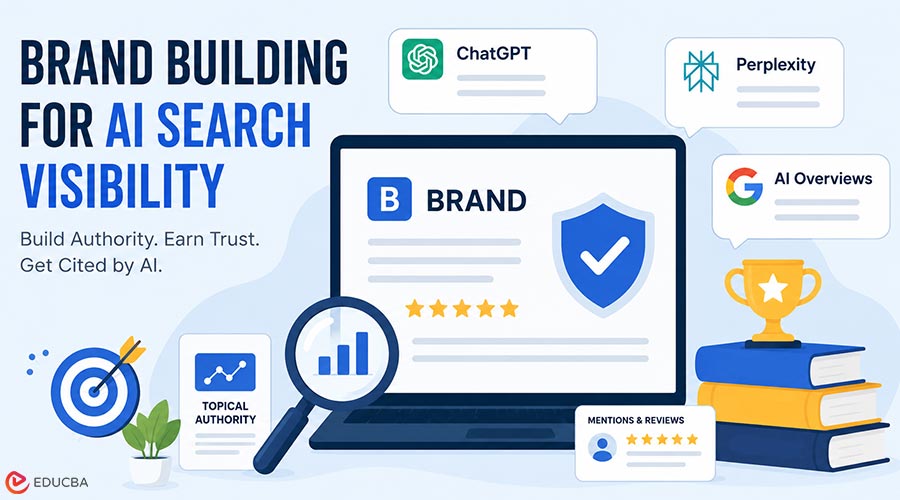
Research suggests that the majority of citations to ChatGPT and Perplexity go to brands that already had strong organic search visibility before generative engines existed. It is not a coincidence, it is a pattern. Most organizations chasing “AI search optimization” right now are optimizing the wrong layer. They are tweaking schema markup and stuffing FAQ sections, hoping that a language model will pick them up. Meanwhile, the brands actually winning citations in AI Overviews, ChatGPT, and Perplexity built something harder to fake: recognition. Brand building for AI search visibility is no longer a nice-to-have. It is the foundation on which GEO (Generative Engine Optimization) is built. If you skip it, you are optimizing a house with no frame.
Why Brand Building Now Determines AI Search Visibility?
Traditional SEO rewarded technical execution. You could out-optimize a larger, better-known competitor with smarter keyword targeting and faster page speed. Large language models are trained on aggregated web mentions, citations, reviews, forum discussions, press releases, and structured data about your company, making a strong, consistent online presence increasingly valuable.
The more consistently your brand shows up across those environments, associated with specific expertise, the more likely a model is to retrieve and cite you when someone asks a relevant question. This is called entity recognition, and it is the mechanism behind most AI search visibility today. A model is not ranking your page. It is recalling your brand as a trusted source on a topic.
The Shift From Keywords to Entities
Old SEO question: “What keyword should this page target? “New GEO question: “What’s my brand recognized for, and does the net agree?” That second question can not be answered with a content calendar alone. It requires a real brand-building strategy, consistent positioning, third-party validation, and topical authority built over time. Companies that treat AI visibility as a content trick usually plateau fast. Companies that treat it as a brand-authority mission tend to compound.
What “Brand Building” Actually Means in a GEO Context?
This is not about logos, taglines, or brand guidelines. In a GEO context, brand building means making your company’s expertise unmistakable and verifiable across the web. Four components matter most:
- Topical Authority: Pick 3–5 core topics your business should own. Publish deeply on them, repeatedly, across formats, not once and done.
- Third-Party Validation: Mentions, inbound links, reviews, podcast appearances, and press coverage from sources an AI model already trusts. This is the digital equivalent of word-of-mouth. It is also the single hardest thing for competitors to replicate quickly.
- Consistent Entity Signals: Your company name, description, and positioning should read the same way across your website, LinkedIn, G2, CrunchBase, directories, and press mentions. Inconsistency confuses both search engines and language models.
- Structured, Citable Content: Content written in a way that is easy for a model to extract and cite clear answers, defined terms, and direct statements. This should never come at the cost of depth or nuance for a human reader.
Growth teams that integrate these four factors into a single approach, rather than treating SEO, PR, and content as separate departments, tend to produce compounding gains in visibility across both traditional and AI-driven surfaces.
GEO vs. AEO: Getting the Hierarchy Right
Many marketers confuse Generative Engine Optimization (GEO) with Answer Engine Optimization (AEO). Although related, they serve different purposes.
- GEO (Generative Engine Optimization): It is a broader strategy. It involves optimizing your entire digital presence, content, brand signals, third-party mentions, and structured data, so generative AI engines understand, trust, and cite your brand.
- AEO (Answer Engine Optimization): It is a component within GEO. It focuses specifically on structuring content to directly answer questions, using FAQ formatting, clear definitions, and concise direct answers.
That structure makes content easy for AI-driven answer boxes and chat interfaces to extract. Think of it this way: GEO is the strategy. AEO is one tactic within it. Companies that only do AEO, perfecting FAQ schema and answer formatting without building brand authority, tend to see short-lived visibility.
A Practical Framework for Brand Building for AI Search Visibility
Here is an operator-level breakdown, not theory, a sequence you can actually run.
1. Audit Your Current Entity Signals (Weeks 1–2)
- Search for your brand across ChatGPT, Perplexity, and Google AI Overviews. Note what they say about you, or if they say anything at all.
- Check the consistency of your company description across your site, LinkedIn, CrunchBase, G2, and any directories.
- Identify your top three competitors and note which sources cite them but not you.
2. Define and Own Your Core Topics (Weeks 3–4)
- Pick 3–5 topics that map directly to your buyers’ real questions, not vanity keywords.
- Map existing content against these topics. Remove or consolidate anything that dilutes topical focus.
- Build a content roadmap that goes deep on those topics across blogs, LinkedIn, and gated assets.
3. Build Third-Party Validation (Ongoing)
- Pursue inbound links and mentions from sites already trusted in your industry, trade publications, podcasts, and industry associations.
- Encourage and respond to reviews on G2, Capterra, or industry-specific platforms.
- Get quoted. Digital PR remains one of the most underused GEO levers in B2B.
4. Structure Content for Extraction (Ongoing)
- Add clear, direct-answer sections to long-form content, this is your AEO layer.
- Use consistent terminology across all content, rather than varying language for “keyword diversity” (a legacy SEO habit that actively hurts entity clarity).
- Keep definitions and data points easy to isolate as standalone sentences that a model could lift and cite.
5. Measure the Right Signals
Traditional rankings would no longer tell the full story. Track:
- Brand mention volume and sentiment across the web
- Citation frequency in AI tools (manually spot-check monthly)
- Branded search volume growth
- Referral traffic originating from AI platforms
Companies implementing this type of framework have reported meaningful gains in the qualified pipeline. Some organizations working with growth partners have seen MQL increases of 50–300%, depending on the starting baseline and market. These figures are illustrative of what is possible with disciplined execution, not a guarantee.
Why This Matters More in Healthcare and Regulated Industries?
Healthcare and medical practice marketers face a unique challenge: strict compliance requirements make aggressive SEO tactics risky, and patient trust is harder to earn through generic content. Brand authority solves both problems at once. Practices and healthcare companies that have paired a HIPAA-conscious content strategy with strong entity signals have reported substantial improvements in lead quality. In some cases, organizations have reported increases of up to 240% in qualified patient inquiries after aligning brand consistency with compliant content architecture, though results depend heavily on baseline and market conditions.
Final Thoughts
Brand building for AI search visibility is not a rebranding exercise, it is an entity-authority mission. It requires topical focus, third-party validation, consistent signals, and content structured for both humans and machines. If you are ready to build a brand authority strategy that compounds rather than resets every algorithm update, DemandNow works with B2B and healthcare companies to build exactly this kind of full-funnel GEO approach from entity audits to content architecture to measurable pipeline growth.
Frequently Asked Questions (FAQs)
Q1. Does brand building actually affect whether ChatGPT or Perplexity cites my company?
Answer: Yes. Generative engines rely heavily on entity recognition, i.e., how consistently and credibly your brand is represented across the web.
Q2. How is GEO different from traditional SEO?
Answer: GEO optimizes your entire brand presence, content, mentions, reviews, and structured data, so generative AI models recognize and cite you as a trusted source.
Q3. Is AEO the same thing as GEO?
Answer: No. AEO (Answer Engine Optimization) is a tactical subset of GEO focused on structuring content for direct answer extraction. GEO is the overarching brand and content strategy that AEO supports.
Q4. How long does it take to see results from a GEO-focused brand strategy?
Answer: Most businesses begin to see measurable shifts in AI citations and branded search within 3–6 months.
Q5. Can small or mid-sized B2B organizations compete with large incumbents in AI search?
Answer: AI models reward topical depth and consistency over sheer brand size, which gives focused, smaller organizations a real opportunity to compete on specific queries.
Recommended Articles
We hope this guide to brand building for AI search visibility has provided valuable insights into improving your brand authority and generative search performance. Explore these recommended articles for additional tips and best practices to strengthen your digital presence.


