


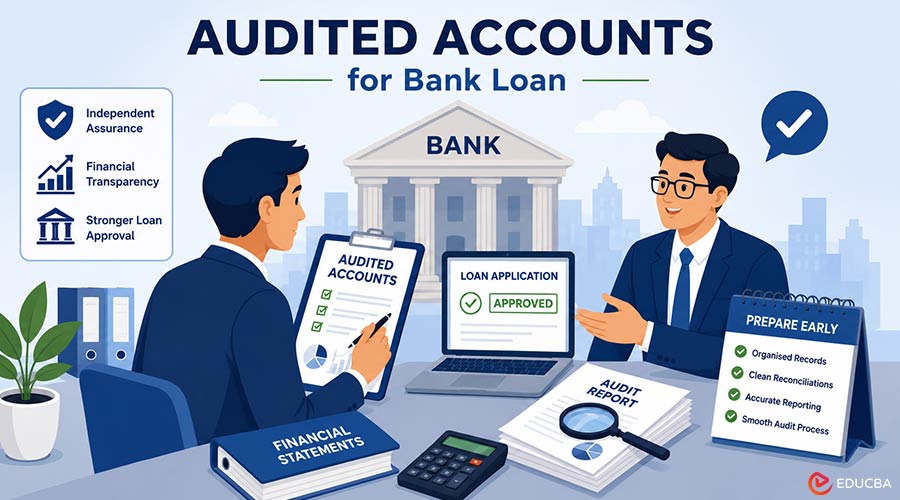
If you have recently applied for a commercial mortgage, a business loan, an overdraft facility, or any lending product where the bank has requested audited accounts for a bank loan, you may have found yourself in an unexpected position. Your company has been filing perfectly compliant unaudited accounts at Companies House for years. Now, suddenly, a third party is telling you those accounts are not sufficient.
This is not unusual. It is the result of a gap between the Companies Act’s audit exemption, which relieves small companies from a statutory audit obligation, and the lending market’s independent requirements for financial assurance.
Why Banks Ask for Audited Accounts for Bank Loan?
Banks, particularly when lending against commercial property or providing facilities above a certain threshold, often require audited accounts for a bank loan as part of their credit assessment of the borrowing entity. Part of that assessment involves reviewing the company’s financial history – its profitability, its cash generation, its leverage, and its overall financial health.
Unaudited accounts are prepared and signed off by the directors and carry no independent professional assurance. Audited accounts, prepared and signed off by a Registered Auditor, carry an independent professional opinion. The auditor has examined the records, tested transactions, and concluded that the accounts give a true and fair view. For a bank assessing lending risk, that independent opinion is meaningful.
This is particularly common in commercial property lending, acquisition financing, revolving credit facilities above a certain threshold, and invoice finance facilities where the quality of the receivables matters significantly. Businesses whose bookkeeping has been properly maintained throughout the year by a professional accountancy firm are in a significantly stronger position when a bank requests audited accounts at short notice. The underlying records are already in the state an auditor expects, reducing the time between engagement and final report.
Voluntary vs. Statutory: What Kind of Audit Do You Need?
If your company is not legally required to conduct a statutory audit, the audit your bank is requesting is voluntary or non-statutory. This is the same process as a statutory audit conducted by a Registered Auditor, involving full testing and evidence gathering, but it is not required by law. It is requested by a specific third party for their own purposes. If your lender has requested audited accounts for a bank loan, a voluntary audit may satisfy the requirement, provided a Registered Auditor conducts it and meets the lender’s standards.
The audit opinion and report produced will be addressed to the directors (and may reference the specific third party’s purpose), but the underlying standard of work is the same. Banks and lenders understand the distinction; they accept non-statutory audited accounts where the audit has been conducted to the same standard as a statutory audit.
It is worth checking, before you commission the audit, what specific form the bank requires. Some lenders want the audit report addressed to them specifically. Other lenders accept audited accounts in the standard format. Clarify their requirements before engaging the auditor to avoid revising the report after completion. Businesses that receive proposals from multiple vetted registered UK auditors simultaneously can ask each firm about their experience with bank-required audit formats as part of the evaluation process.
Timeline: The One Thing That Catches Most Directors Off Guard
The audit process has a minimum timeline. Even the most efficient audit firm needs time to plan the engagement, gather and test evidence, prepare the draft report, receive management representations, and finalize the opinion. For a small company with clean books, that process typically takes three to six weeks from engagement to final report. Businesses that need audited accounts for a bank loan should begin the audit process as early as possible, as the timeline can affect financing deadlines.
For a company whose books need attention before the auditor can start – reconciliations to complete, missing invoices to locate, director’s loan accounts to document, the timeline extends further. Many commercial transactions operate on timescales that do not accommodate a six- to eight-week audit process if the audit was not anticipated.
Working with a specialist audit file preparation and support service to organize financial records and prepare structured documentation before the auditor begins can meaningfully reduce the active audit timeline. Files delivered in a structured, review-ready format allow auditors to move directly to testing rather than spending their first week organizing the raw material.
Businesses with Irish entities can engage Ireland-registered auditors through a matched-proposal process. These auditors can complete the Irish audit alongside the UK audit. US-incorporated entities can also engage certified audit professionals to meet US lender requirements through a similar process.
Preparing Your Accounts Before the Auditor Arrives
If your company has never undergone an audit, your financial records may not meet auditor expectations. Common issues include poorly maintained bank reconciliations, mixed personal and business transactions, and untracked directors’ loan accounts. Other problems include missing accruals, prepayments, and fixed asset records that do not match recorded depreciation.
Preparing your records early helps you produce audited accounts for a bank loan and reduces audit delays. Working with an accounting and bookkeeping firm before the audit begins can improve efficiency and lower costs. This approach prevents auditors from spending time fixing bookkeeping issues during fieldwork.
Auditors charge standard audit rates for every hour spent resolving bookkeeping problems. An accountant can complete the same corrective work at a lower cost and create a better audit foundation.
Businesses that need quick bookkeeping updates and audits should inform both parties early. A well-organized accounting firm and a responsive auditor can work together. The auditor can begin planning while the accountant finalizes the financial records.
After the Audit: What the Bank Does With It
After you submit the audited accounts for a bank loan, the lender adds them to your credit file. The lender may review them throughout the term of the lending facility. Many lenders also require annual management accounts. Some also request annual audited accounts, especially for larger or long-term facilities.
If the audit reveals issues, such as a qualified opinion, going concern disclosures, or significant related party transactions, the bank may ask questions. Directors should review the audit report before submitting it. They should also clearly explain any areas of concern if questions arise.
The information in this article is intended for general educational purposes only and should not be considered financial or lending advice. For advice on specific lending requirements, consult your bank, broker, and a qualified UK accountant.
Final Thoughts
Applying for a business loan or commercial mortgage can involve more than meeting statutory filing requirements. If a lender requests audited accounts for a bank loan, it wants independent assurance. The lender needs confirmation that your financial statements accurately reflect your company’s financial position. Understanding this requirement and preparing early can help avoid delays, reduce audit-related challenges, and improve your chances of securing finance. Qualified accountants and registered auditors help complete the audit process efficiently while ensuring it meets the lender’s expectations.
Recommended Articles
We hope this guide on audited accounts for a bank loan helps you understand why lenders request audited financial statements and how to prepare for the audit process. Explore these recommended articles for additional insights on business finance, accounting, audits, and securing funding with confidence.


