


Updated May 25, 2026
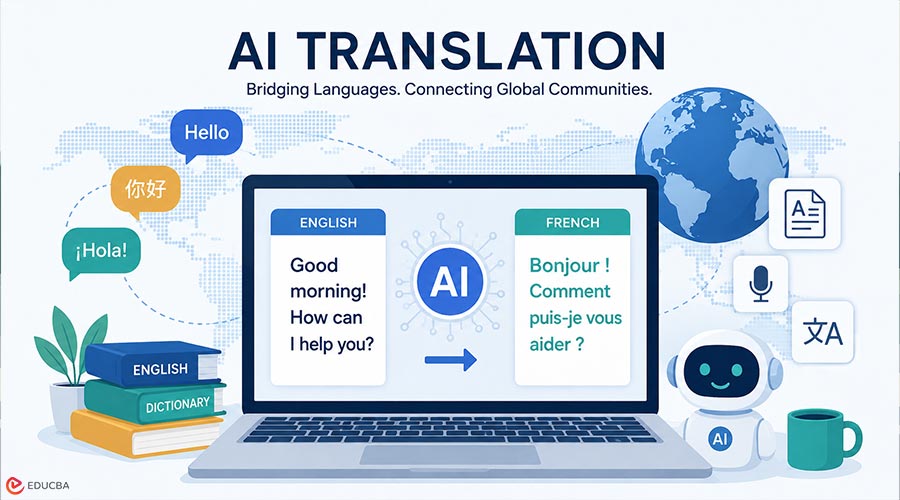
What Are AI Translation Tools?
AI translation tools are software systems that use neural machine translation and large language models to convert text from one language to another with minimal human input. In simple terms, they analyze the source text, predict the most likely word sequence in the target language, and generate output that often appears accurate at first glance. Modern tools like ChatGPT, Claude, Gemini, DeepL, and Google Translate all fall under this umbrella, even though their underlying engines differ. Common AI translation tools used by professionals today include:
- ChatGPT, Claude, and Gemini for general-purpose translation
- DeepL for European language pairs
- Google Translate for broad coverage of less common languages
- Specialized aggregator platforms like MachineTranslation.com
- CAT-integrated engines such as Smartling, memoQ, and Phrase
Key Takeaways
- AI translation tools handle volume and speed well, but they struggle with cultural nuance, idiom, and domain-specific terminology.
- The most common blind spots include grammatical agreement in gendered languages, false cognates, and register confusion (formal versus informal).
- Industries with high-stakes content, such as legal, medical, marketing, and government, still depend on professional human translators or post-editors.
- The most reliable workflow combines an AI draft with a qualified human reviewer who catches what machines miss.
How AI Translation Tools Work?
Most current tools rely on one of three approaches.
1. Neural Machine Translation (NMT)
NMT engines treat translation as a probability problem. They analyze full sentence structure and predict the most likely target-language equivalent. The output is smoother than that of older rule-based systems, but the engine still relies entirely on patterns from the training data, with no understanding of meaning.
2. Large Language Models
Tools like ChatGPT, Claude, and Gemini were not specifically designed for translation. They were trained to generate text. Translation is a side effect of predicting the next word in a sequence. That makes them flexible across topics but unreliable for high-stakes professional work.
3. Hybrid and Smart Aggregation Engines
Newer platforms compare output from several engines and select the version with the strongest cross-model agreement. This reduces single-model bias. It does not eliminate the deeper problems covered later in this article.
Where AI Translation Tools Work Well?
Not every translation needs a professional. Here are the cases where AI delivers real value with limited risk.
1. High-Volume Internal Communications
Email summaries, internal Slack threads, quick memos for cross-border teams. The audience is small and forgiving.
2. First-Draft Production
Generating a rough version that a human reviewer then polishes. This is now the standard workflow in most professional translation agencies.
3. Multilingual Customer Support
Chatbots and FAQ pages that need to scale across 20+ languages. AI handles the volume, and human review catches the edge cases.
4. Personal and Travel Use
Reading a menu, understanding a sign, sending a casual message to a colleague abroad. No two ways about it, AI excels here.
5. Search and Content Discovery
Helping someone find information in another language is different from publishing in another language. AI is good enough for the first, not the second.
Common Blind Spots of AI Translation
Here is where things get tricky. AI translation tools have systematic weaknesses that show up across language pairs and engines.
1. Grammatical Agreement in Gendered Languages
French, Spanish, German, and many other languages require gender and number agreement that English does not. The English pronoun « they » is a frequent trap. AI tools often translate it as masculine plural in French (« ils »), even when the surrounding context makes it clear that the referent is a single person or feminine.
2. False Cognates and Anglicisms
The classic example: « actually » translated as « actuellement » in French, when « actuellement » means « right now », not « in fact ». Across the board, AI tools confuse cognates that look similar but carry different meanings. The mismatch is hard to spot without a trained ear.
3. Idioms and Cultural Expressions
A few years ago, a Telus Fund ad in Canada read in French: « Prenez une profonde respiration, broyez-vous. Va le tuer. » A literal back-translation: take a deep breath, put yourself in a blender, go kill him. The original English copy was « Take a deep breath, ground yourself. Go kill it. » That single misfire compromised the brand’s reputation across a national audience. A detailed analysis of these blind spots is documented by translator Maxime Collins, who catalogs the most common AI translation errors he encounters in his daily work with francophone and anglophone clients.
4. Inconsistent Terminology in Long Documents
In a 40-page legal report in which the term « agreement » appears 23 times, AI tools may render it as « accord », « entente », « convention », or « contrat » interchangeably. For a contract or compliance document, that inconsistency creates real legal exposure. The probabilistic model behind AI translation does not enforce a single chosen term across a document.
5. Register and Tone Confusion
Switching between « tu » (informal) and « vous » (formal) in French is a small mistake with a big impact. AI tools handle register inconsistently, especially in dialogue or marketing copy, where the wrong choice can sound either cold or unprofessional to a francophone audience.
Industries Where Human Oversight Remains Essential
Some sectors simply cannot absorb the errors described above.
1. Legal and Contract Content
A single misrendered term can change the meaning of a clause. In contract translation, consistency and precision are non-negotiable, and the cost of an error compounds across every signature on the document.
2. Medical and Pharmaceutical
Dosage instructions, drug labeling, and patient consent forms. In Canada and the EU, certified human translators are often required by regulation for this kind of content.
3. Marketing and Brand Voice
A brand voice is built over the years. AI flattens it. The Telus example above shows just how badly an unsupervised translation can damage a brand’s reputation in a single campaign.
4. Government and Public Communications
Public-facing content in officially bilingual or multilingual jurisdictions has legal requirements for linguistic quality. AI alone does not meet that bar, and most public agencies enforce a mandatory human review step.
5. Literary, Editorial, and Creative Content
Translation here is closer to rewriting. The translator interprets, makes stylistic choices, and preserves voice. AI is not built for that, and the output usually feels flat to native readers.
Best Practices for Combining AI and Human Review
The real question is not choosing between AI and human translators. It is sequencing them well.
1. Use AI Only as a First Draft
The AI handles bulk. The human handles judgment. This division of labor saves time without sacrificing quality, especially for documents over 5 pages.
2. Build a Termbase for Your Domain
A glossary of approved translations for your industry’s key terms. Even a basic termbase prevents half of the inconsistency problems described earlier in this article.
3. Define Risk-Based Review Thresholds
Decide which content needs full human review (legal, medical, marketing) and which can ship after a quick check (internal, low-visibility). Most teams skip this step and either over-review everything or under-review the wrong things.
4. Audit Translation Output Periodically
Run a quarterly sample audit of what is being published in other languages. You will catch drift before it becomes a brand problem.
5. Train Your Team on AI Capabilities and Limits
Most reviewers either trust the AI too much or distrust it entirely. Both extremes hurt productivity. A short internal training session that shows where the tools succeed and fail makes reviewers faster and more accurate.
Final Thoughts
AI translation tools have moved from a useful curiosity to a standard workflow component in roughly five years. They handle volume and speed in ways no human team could match. But the limitations they carry, especially in gendered languages, idioms, terminology, and register, mean that professional human translation is not going away. The teams getting the best results today combine fast AI drafts with focused human review by qualified linguists. That hybrid model is now the working reality of the profession.
Frequently Asked Questions (FAQs)
Q1. Can AI translation tools replace professional human translators?
Answer: Not for high-stakes professional content. AI handles speed and volume well, but it misses the mark on idiom, consistency, and tone, which costs brands credibility and trust. Most professional translation workflows now combine AI drafting with human post-editing.
Q2. Which industries are safest for using AI translation without review?
Answer: Low-stakes internal communications, personal use, and content discovery. Legal, medical, marketing, and government content require human oversight to meet quality and compliance standards.
Q3. What is post-editing in translation?
Answer: Post-editing is the process of refining a machine-generated translation. A professional translator reviews the AI-generated text, fixes errors, refines terminology and tone, and ensures the final version reads naturally in the target language.
Q4. How do you decide when to use AI versus human translation?
Answer: Apply a risk threshold. If a translation mistake could damage your brand, cost a client, or violate a regulation, the content needs human review. If the audience is internal and the cost of an error is low, AI translation tools alone may be enough.
Recommended Articles
We hope this guide to AI translation helps you better understand its benefits and limitations. Check out these recommended articles for more insights and strategies.


