


Updated September 1, 2026
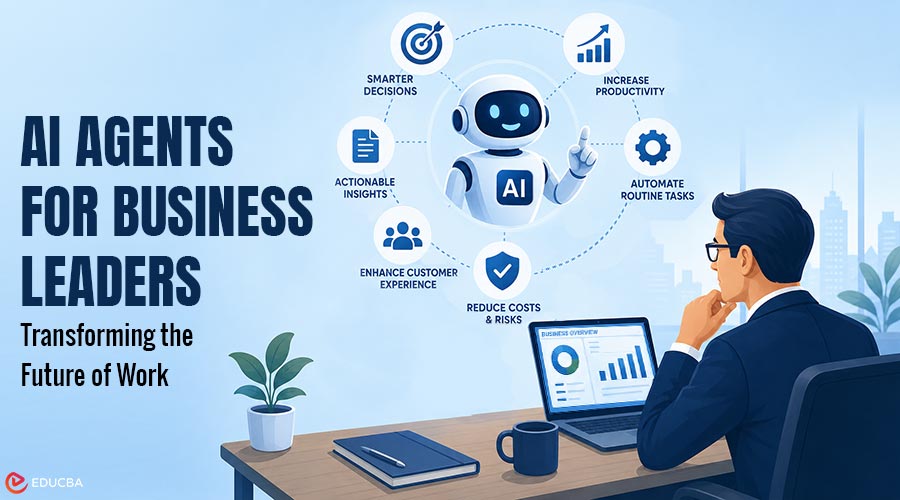
Artificial intelligence is rapidly changing how organizations operate, making it increasingly important for business leaders to understand the practical value of agentic AI capabilities. Among these advancements, AI agents for business leaders are becoming a crucial area of knowledge because they help organizations improve customer interactions, automate complex workflows, and support faster, data-driven decision-making.
As businesses continue to adopt intelligent technologies, leaders who understand these capabilities will be better equipped to identify opportunities, guide digital transformation initiatives, and build teams that can collaborate effectively with AI-driven solutions. Successful organizations are no longer viewing AI as a replacement for human expertise but as a strategic tool that boosts productivity and drives innovation.
The Shift From AI Tools to AI Agents
Many organizations began their AI journey with tools designed to automate repetitive tasks or generate content in response to user prompts. While these technologies remain valuable, they often require constant human direction and have limited ability to complete multi-step processes independently.
AI agents mark the next evolution of enterprise intelligence by analyzing data, making decisions within set limits, and handling complex tasks with minimal oversight. This evolution allows businesses to automate entire workflows instead of isolated tasks, creating greater efficiency and consistency across departments.
Why Business Leaders Need AI Literacy?
Modern leadership requires more than financial expertise and strategic planning because technology increasingly shapes every aspect of business performance. Executives who understand AI concepts are better positioned to evaluate new solutions, manage implementation risks, and identify opportunities that competitors may overlook.
AI literacy also improves communication between leadership teams and technical specialists. When decision-makers understand how AI agents function, they can establish realistic expectations, allocate resources effectively, and develop strategies that align technology investments with business objectives.
Improving Customer Experience Through AI Agents for Business Leaders
Customer expectations continue to evolve as people demand faster responses, personalized interactions, and consistent service across multiple communication channels. AI agents help organizations meet these expectations by handling routine requests, gathering relevant information, and providing timely recommendations to human representatives.
Rather than replacing employees, AI agents often allow customer service professionals to focus on conversations that require empathy, creativity, and complex problem-solving. This balanced approach improves operational efficiency while maintaining the human connection that remains essential for building trust and long-term customer relationships.
Supporting Better Business Decisions
Business leaders face growing volumes of data that can be difficult to interpret without intelligent support. AI agents can continuously monitor information, identify meaningful patterns, and present actionable insights that help managers make informed decisions more quickly.
This capability becomes especially valuable in fast-moving industries where opportunities and risks change rapidly. Rather than depending only on past reports, leaders can use real-time insights to enable proactive planning and make more informed decisions.
Preparing Organizations for the Future of Work
The workplace is evolving as AI becomes integrated into everyday business operations, making adaptability one of the most valuable leadership qualities. Organizations that invest in developing AI knowledge among managers are more likely to achieve successful technology adoption because leaders understand both the opportunities and the challenges involved.
Future business leaders will also need to develop policies that promote responsible AI usage, transparency, and accountability. Establishing clear governance ensures that autonomous systems operate within ethical guidelines, protect customer data, and support organizational values.
Building Competitive Advantage Through AI Skills
Companies that successfully integrate AI into their operations often gain advantages through improved efficiency, faster innovation, and better customer experiences. However, these benefits depend on leaders who understand how to identify appropriate use cases and manage organizational change effectively. Developing AI knowledge is becoming a core leadership competency rather than a specialized technical skill.
As AI agents continue to evolve, executives who embrace continuous learning will be better prepared to guide their organizations through changing market conditions and emerging technological opportunities.
Final Thoughts
The growing importance of AI agents for business leaders is changing how organizations approach strategy, innovation, and operations. Understanding how autonomous systems support decision-making, customer experience, and operational efficiency is becoming essential for anyone responsible for guiding organizational strategy. Leaders who invest in AI literacy today will be better prepared to navigate future challenges, unlock new opportunities, and build resilient organizations that thrive in an increasingly intelligent business landscape.
Recommended Articles
We hope this guide on AI agents for business leaders helps you understand the future of intelligent business solutions. Explore these articles for more insights on AI and business innovation.


