


A mutual fund delivering a 15% annual return looks exciting at first glance. As an investor, it is natural to focus on the headline returns and expect your SIP investments to grow steadily over the years. However, the real return on investment is rarely the same as the return displayed by a fund. Several factors beyond the advertised percentage influence the actual amount that contributes to your long-term wealth.
Inflation reduces your purchasing power over time, while taxes and investment costs lower your overall gains. Understanding the real return on investment helps investors make informed decisions and build wealth with realistic expectations. This article helps you understand what affects your investment returns and how to plan for your financial goals.
What is the Real Return on Investment?
The real return on investment is the actual return you earn after accounting for factors such as inflation, taxes, and investment-related expenses. While a mutual fund may generate impressive nominal returns, the amount of wealth you can truly enjoy depends on how much of those returns remain after these deductions.
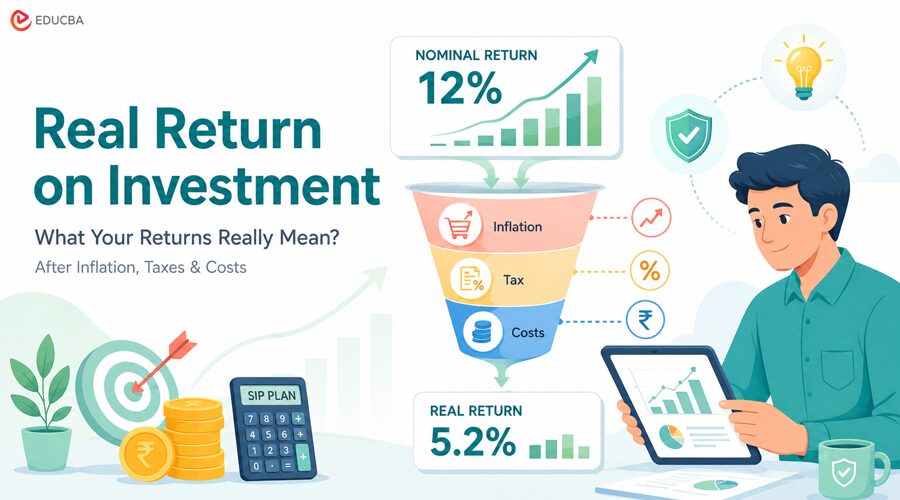
For example, suppose you invest in an index fund that delivers a 12% annual return. If inflation averages 6% during the same period, the purchasing power of your returns is already significantly reduced. Once taxes on capital gains and other charges are taken into account, your effective return becomes even lower.
This is why experienced investors focus on the real return on investment instead of simply comparing headline return percentages.
Looking Beyond the Return Percentage
The return percentage you see beside a mutual fund reflects growth before factors like inflation and taxes come into the equation. Imagine investing in an index fund that grows by 12% a year.
At the same time, inflation averages 6% during the same investment tenure. Now, add the taxes on your gains, and the effective return reduces much further. This is why experienced investors look beyond return percentages when building long-term wealth.
As an investor, it is easy to overlook several important elements that influence the real return on investment, including:
- Inflation
- Taxes
- Expense ratios
- Transaction charges
Unless you factor in these variables, expectations for crucial long-term goals like retirement or children’s education can be unrealistic.
How Inflation Affects the Real Return on Investment?
Let us understand why purchasing power matters more than the value of your portfolio. A growing portfolio does not necessarily mean growing wealth. Consider a young employee planning for a child’s higher education 15 years from now.
The cost of education is likely to increase significantly over that period. This means the portfolio’s value may not be sufficient to cover educational expenses at today’s costs. The same principle applies to healthcare, travel, and housing costs. Any investment you make today must grow faster than inflation to create substantial wealth.
Planning Financial Goals with Realistic Numbers
Investors must estimate future costs realistically rather than relying on today’s prices to make financial planning more accurate. An SIP goal calculator with inflation simplifies the planning phase by adjusting the future value of your goal to account for inflation. Accordingly, you can estimate the SIP amount necessary to achieve that goal.
Planning around the real return on investment enables investors to set practical targets instead of relying on overly optimistic assumptions.
Taxes Can Change the Outcome
Investors often overlook the impact of taxation on their returns, which alters the outcome. The norms governing taxation vary across investment categories. Capital gains taxes vary based on the asset class and the holding period.
So, the amount earned from returns before tax is less than what you can reinvest or spend after redeeming your units. Investors who ignore taxes in investment planning may overestimate the final corpus, particularly for long-term goals.
Making Tax-Aware Investment Decisions
Effective tax planning can improve your overall investment outcomes.
An SIP calculator with tax deduction helps estimate how taxation may affect your final corpus. Using such tools allows investors to make more informed decisions and better understand their expected after-tax real return on investment.
When tax implications are incorporated into investment planning, it becomes easier to establish realistic financial goals and maintain long-term discipline.
Other Factors That Influence the Real Return on Investment
Apart from inflation and taxes, several additional costs can gradually reduce your investment returns over time.
These include:
- Mutual fund expense ratios
- Brokerage charges
- Transaction fees
- Exit loads
- Portfolio management costs.
Although each expense may seem small individually, its cumulative effect over many years can significantly reduce your real return on investment.
Reviewing these costs before investing helps improve long-term portfolio performance.
Final Thoughts
Comparing return percentages is a useful starting point, but it should never be the only measure of investment success. The real return on investment reflects the purchasing power your investments create after accounting for inflation, taxes, and other expenses.
By looking beyond headline returns and planning with realistic assumptions, investors can make smarter financial decisions and build sustainable long-term wealth. A disciplined investment strategy, combined with inflation-aware and tax-efficient planning, helps maximize your real return on investment and makes achieving your financial goals far more attainable.
Recommended Articles
We hope this guide on real return on investment helps you understand how inflation, taxes, and investment costs affect your actual returns and long-term wealth creation. Explore these recommended articles for more insights into SIP planning, mutual fund investing, financial goal planning, inflation-adjusted returns, and smart investment strategies.

