


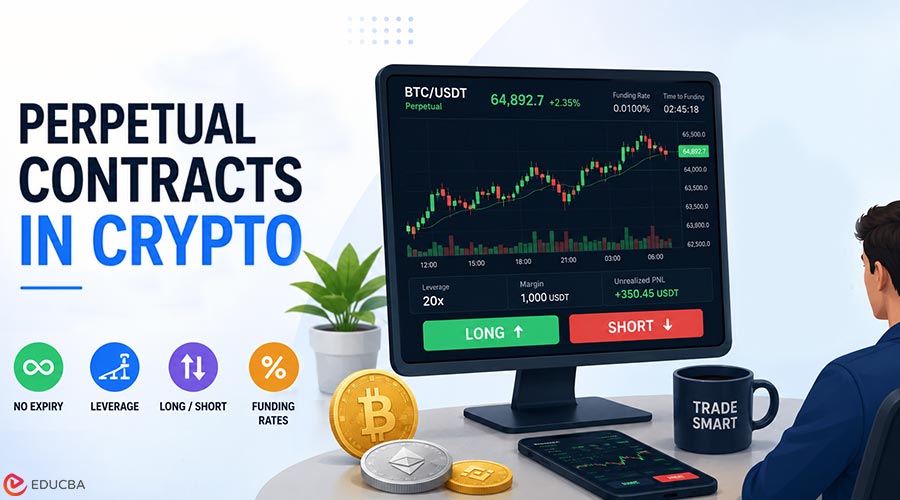
The cryptocurrency market has evolved from a simple exchange of digital money into a complex financial structure with advanced trading instruments. One of the most essential tools for the crypto market is derivatives, which help traders bet on crypto price movements without investing directly in cryptocurrencies. Currently, one of the most popular derivatives is perpetual contracts in crypto. This is a special type of agreement that enables you to open positions based on the direction you expect the market to take.
Unlike futures, investors in perpetual contracts can hold a position for an unlimited length of time as long as the required margin level is being met. The rollover mechanism of perpetual contracts has made them popular among traders, offering the flexibility to profit in both bullish and bearish markets. The perpetual market is full of opportunities, but also risks. Before engaging in the perpetual contract, it is essential to understand how these contracts work, how to trade them, and what factors influence them.
What Are Perpetual Contracts?
A perpetual contract is a cryptocurrency derivative that mirrors the price of an underlying digital asset, such as Bitcoin or Ethereum. Instead of buying the cryptocurrency, traders enter into a contract that allows them to profit from the asset’s price movements.
For example, suppose you are certain that the price of Bitcoin will increase in the future; you open a long position. It is not the price of Bitcoin that you hold in such a position, but your exposure to the price movements. If Bitcoin’s price increases, your position increases in value, and vice versa. Instead, if you anticipate a downward price trend, you can open a short position to profit from the decline.
How Perpetual Contracts in Crypto Trading Work?
To better understand how this type of instrument works in trading, let us go over what is involved.
#1. Leverage
Leverage is one of the main reasons people trade perpetual contracts, as it enables traders to control a larger position with less capital. For instance, with 10x leverage, a trader with $1,000 can enter a $10,000 position, and if the market moves in their direction, the returns can be much larger than buying on the spot. However, leverage also increases risk. If the market moves against you and your margin is low enough, the exchange may automatically close out your position.
#2. Margin Requirements
Margin is the amount of collateral funds that you allocate to open a leveraged position. Most trading platforms offer two standard margin schemes. Isolated margins limit the risk to the amount of margin you assign to a specific trade. Open exchanges allow you to use your entire available balance to back your position. Cross margins add more flexibility but may also expose more of your balance to risk. Good margin management is one of the most crucial skills for any participant in the derivatives markets.
#3. Funding Rates
Perpetual contracts in crypto have no expiry dates, so to keep their prices near the spot price of a cryptocurrency, exchanges rely on funding rates. Funding payments are exchanged between traders with long and short positions. When the perpetual contract price is higher than the spot market price, long traders may pay short traders, and vice versa. This is how it works to balance the derivative market and the real cryptocurrency market.
Why Traders Choose Perpetual Contracts?
Traders prefer perpetual contracts because they offer advantages that traditional cryptocurrency investing cannot.
- Winning Market: You can buy when the price is up and short when it is down, so you can make a profit in the up-market and down-market.
- Capital Efficiency: Leverage allows taking on larger net positions with less capital, thereby gaining greater market exposure without buying a large amount of cryptocurrency.
- Hedging opportunities: If you are a long holder of crypto such as Bitcoin, a short position provides a hedge against potential losses during a market downturn.
For traders seeking additional information and professional trading solutions, platforms such as Flipper offer access to resources tailored to modern cryptocurrency markets.
Strategies Used in Perpetual Trading
Perpetual trading success demands planning, analysis, and discipline. Each trader backs their own trading method and strategy as outright for or against market trends.
#1. Trend Trading
Trend trading involves identifying the overall market direction and opening positions that follow that movement. If the market shows strong upward momentum, traders may look for opportunities to go long. During bearish conditions, they may consider short positions.
#2. Technical Analysis
The majority of traders use technical analysis, which examines price charts, trading volume, support and resistance levels, and past market movements to determine potential entry and exit points. Technical analysis can guide traders’ decisions, but it does not guarantee future outcomes. Cryptocurrency prices are affected by many factors, including market news, economic conditions, regulatory action, and investor sentiment.
#3. Risk Management
Risk management is essential, especially when trading leveraged products. Many experienced traders employ stop orders, avoid excessive leverage, and limit the portion of their capital outstanding in any trade. Good risk management techniques help traders protect their accounts and remain in the market during highly volatile periods.
Risks You Should Understand
Perpetual trading with crypto allows traders to profit, but it also carries significant risk.
- Liquidation Risk: The biggest risk is liquidation, as crypto perpetual brokers may automatically close a highly leveraged position that crosses a set threshold against a trader.
- Market Volatility: Crypto market volatility is another risk factor. Crypto prices can swing rapidly, and this can lead to unexpected outcomes in a heavily leveraged position.
- Emotional Trading: Making impulsive or emotional decisions can also hurt performance. Fear-, revenge-, or greed-driven trades can cause traders to deviate from their own strategies and take excessive risk.
Traders should be mindful of their risk tolerance and have a trading strategy in place before using perpetual contracts in crypto.
Tips for Beginners
- Learn Before You Trade: Think before investing a ton of capital in an exchange, so you understand trading concepts such as order types, margin rates, funding rates, initial and maintenance margin ratios, and liquidations.
- Start Small: Practice with small positions when developing or testing your trading strategy. You can observe the performance and avoid unnecessary risks.
- Use Leverage Smartly: Basically, do not try to take maximum leverage just because it is available. Leverage is good for boosting returns but also for boosting losses.
- Consistency-Centric: Successful traders do not chase quick profits; they simply develop a solid strategy, manage risk effectively, and remain consistent over time.
Final Thoughts
Perpetual contracts in crypto have become a major driver in modern cryptocurrency trading because they allow you to gain leveraged exposure and trade in both directions, whether the market is bullish or bearish. They allow you to speculate on the price of the underlying asset without owning it. Still, you have to apply the right knowledge and ongoing risk management techniques to benefit. By understanding how these contracts work, applying appropriate strategies, and risk management approaches, you will be more equipped to make informed choices when exploring the world of cryptocurrency derivatives.
Recommended Articles
We hope this comprehensive guide to perpetual contracts in crypto has enhanced your understanding of cryptocurrency derivatives. Check out these recommended articles for more expert insights and practical trading strategies.

