


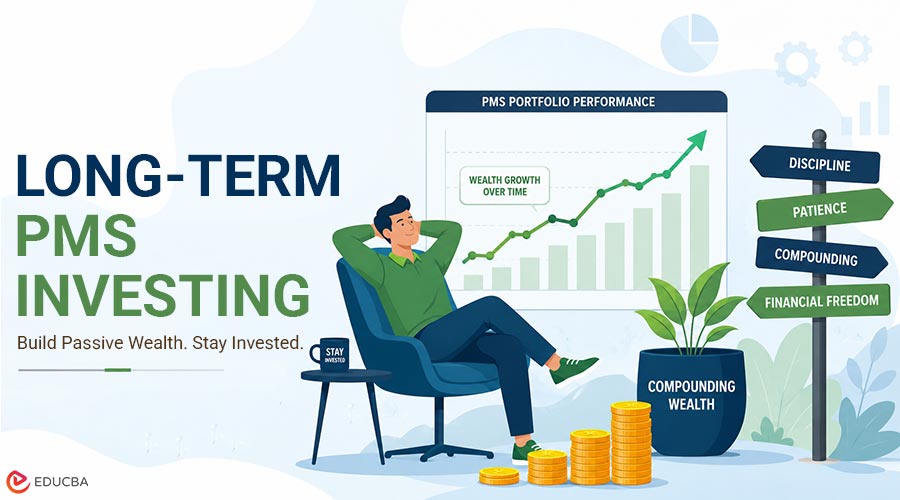
Most investors go after wealth by staying involved: scanning the markets daily, responding to every dip, and second-guessing their decisions along the way. Portfolio Management Services (PMS) is a different ball game altogether. With a properly structured PMS, the professional manager handles most of the active investing, leaving the investor in a largely passive role. But that is not a foregone conclusion. It depends on the mandate chosen, the understanding of fees and taxes, and whether the investor is truly committed to a long-term horizon. This article explores the key decisions that help investors approach long-term PMS investing with clarity instead of assumptions.
Why “Passive” and “PMS” Are Not a Contradiction?
At first glance, pairing “passive” with Portfolio Management Services (PMS) sounds contradictory. PMS is, by design, an actively managed and concentrated portfolio strategy, run by a professional manager who makes ongoing calls on stock selection and timing. So where does “passive” fit in? The answer lies in whose effort is being described. In this context, “passive” refers to the investor’s degree of involvement, not the underlying investment style. The manager remains active. The investor does not have to be. This approach differs significantly from passive fund investing, such as index funds or ETFs, where the strategy follows predefined rules and is designed to keep costs low. Do not confuse the two approaches.
To understand PMS itself: It is a SEBI-registered offering under the SEBI (Portfolio Managers) Regulations, with a minimum investment ticket size of ₹50 lakh. Unlike a mutual fund, a PMS holds the portfolio directly in the investor’s demat account instead of pooling it with other investors’ money. There are three mandate types under PMS: discretionary, non-discretionary, and advisory. Only one of these genuinely supports a passive investor experience, and that distinction shapes everything that follows.
Choosing the Right PMS Mandate for Passive Investing
The type of PMS mandate you choose determines how passive your investment experience will be.
- Discretionary PMS: Discretionary PMS gives the manager full authority to execute trades in line with the agreed strategy, without seeking approval for each transaction. The investor reviews outcomes periodically rather than approving individual trades. This is the only mandate type that allows genuinely hands-off involvement.
- Non-discretionary PMS: Requires investor sign-off before every trade. Regardless of intent, this structure cannot function as a passive experience since it demands ongoing engagement.
- Advisory PMS: Advisory PMS is the most hands-on of the three. The manager only advises; the investor is responsible for execution. This option is included for completeness, but it represents the opposite end of the passivity spectrum.
If passive wealth creation is the goal, the choice of mandate is the first and most consequential decision.
Cost and Tax as Variables That Compound Against You
Fees deserve the same scrutiny as returns, because they compound over time in the opposite direction. PMS structures typically include a fixed management fee, a performance fee tied to a hurdle rate, and often a high-watermark provision that charges performance fees only on new gains. A seemingly small difference in fees, sustained over a decade or more, can materially reduce terminal wealth. This drag is more pronounced in a passive holding approach. Because the investor does not generate any offsetting tactical alpha, investment costs directly reduce returns instead of active investment decisions partially offsetting them.
Taxation works differently for mutual funds. Because PMS holdings remain in the investor’s own demat account, every sale that realizes a gain creates a taxable event for the investor. In contrast, mutual funds do not tax internal trades until the investor redeems the units. High portfolio churn can therefore trigger short-term capital gains, taxed at 20% on listed equity for transfers on or after 23 July 2024, rather than the more favorable long-term rate of 12.5% on listed equity gains above ₹1.25 lakh per financial year. NRI investors should also be mindful that PMS investments fall under FEMA guidelines, which govern the remittance and repatriation of funds. Tax and regulatory treatment can vary based on your individual circumstances, so consult a qualified tax advisor before you invest.
Why Long-Term PMS Investing Requires Patience?
Concentrated strategies, whether value, momentum, or contrarian in style, tend to move in multi-year cycles. They can underperform their benchmark for extended stretches before potentially recovering. Recovery is possible, not guaranteed, and this distinction matters for anyone considering PMS as a long-term vehicle. Every PMS strategy implicitly asks for a specific time horizon to play out. Investors who exit mid-cycle, often at the point of maximum discomfort, break the compounding that the strategy is designed to deliver.
This ties directly to concentration. PMS portfolios are typically more concentrated than diversified mutual funds, often holding 15 to 25 stocks compared to 40 or more in a typical diversified fund. These figures are illustrative and vary by manager and strategy, not a regulatory mandate. Higher conviction positioning implies a wider range of possible outcomes, both favorable and unfavorable. This is a structural trade-off, not a risk to be minimized or ignored.
Liquidity and Exit, the Question Every Long-Term Investor Should Ask First
Before committing to a long-horizon vehicle, liquidity terms deserve upfront attention. Indian PMS structures generally carry no SEBI-mandated lock-in period, but individual managers may apply exit loads during an initial window. Redemption also does not happen instantly, as it can with an open-ended mutual fund. Providers set these terms differently, and they document them in the SEBI-mandated Disclosure Document and the client agreement. Reading both carefully before investing is essential, not optional.
What Passive Monitoring Actually Looks Like in Practice?
Passive does not mean absent. A realistic cadence involves quarterly or annual portfolio reviews, reading the Disclosure Document for any strategy or fee changes, and tracking performance at the strategy level rather than reacting to individual stock movements. This is a deliberate shift away from daily app checks and toward a practical, actionable definition of passive involvement in PMS investing.
Final Thoughts
Passive wealth creation through long-term PMS investing is not something that automatically happens after you invest. You achieve this outcome by making three key decisions at the start: choosing a discretionary mandate that genuinely supports hands-off involvement, understanding how fees and taxes compound over a long holding period, and committing to a time horizon that gives a concentrated strategy enough time to succeed. Get these right, and passivity becomes the natural result rather than a hopeful assumption.
Recommended Articles
We hope this comprehensive guide to long-term PMS investing helps you make informed investment decisions and build sustainable wealth. Check out these recommended articles for more insights, strategies, and best practices to strengthen your investment journey.


