
What is Employee Burnout?
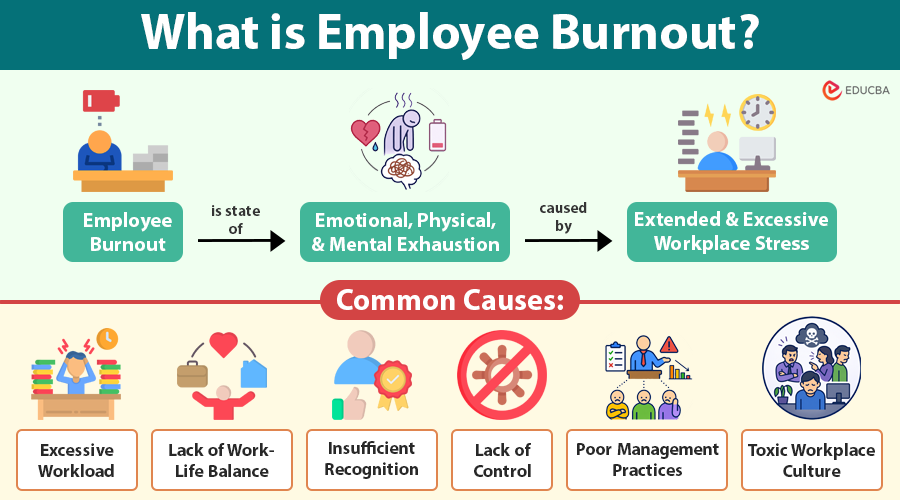
Employee burnout is state of emotional, physical, and mental exhaustion caused by extended and excessive workplace stress. It occurs when employees feel overwhelmed, emotionally drained, and unable to meet ongoing work demands.
Burnout does not develop overnight. Instead, it gradually emerges when workplace pressures continuously exceed an employee’s ability to cope.
For example, a employee who consistently works overtime, manages unrealistic deadlines, and receives little recognition may eventually experience exhaustion, reduced motivation, and declining performance.
Table of Contents:
- Meaning
- Key Characteristics
- Common Causes
- Stages
- Effects
- How Can Organizations Prevent Burnout?
- How Can Employees Overcome Burnout?
- Benefits
- Challenges
Key Takeaways:
- Employee burnout results from prolonged workplace stress that consistently exceeds employees’ coping capacities.
- Early recognition of burnout helps organizations effectively prevent productivity loss and employee disengagement.
- Supportive leadership, balanced workloads, and recognition significantly reduce the risk of workplace burnout.
- Employees can overcome burnout through self-care, boundaries, and effective stress management.
Key Characteristics of Employee Burnout
Below are the primary characteristics of employee burnout that help identify its presence in the workplace.
1. Emotional Exhaustion
Employees feel mentally and physically drained, experiencing persistent fatigue and struggling to manage daily responsibilities.
2. Depersonalization or Cynicism
Employees develop negative attitudes, emotional detachment, and reduced empathy toward colleagues, customers, and work.
3. Reduced Personal Accomplishment
Employees experience incompetence, reduced productivity, and diminished achievement, which in turn questions their effectiveness and contributions.
4. Decreased Motivation
Employees lose enthusiasm, initiative, and commitment, resulting in lower engagement and reduced workplace performance.
5. Difficulty Concentrating
Burnout impairs focus, decision-making, memory, and problem-solving, significantly reducing overall work efficiency.
6. Increased Irritability
Employees become easily frustrated, impatient, and emotionally reactive, negatively affecting teamwork and workplace relationships.
Common Causes of Employee Burnout
Several workplace and organizational factors can contribute to employee burnout. Some of the most common causes include:
1. Excessive Workload
Consistently heavy workloads and unrealistic deadlines overwhelm employees, creating chronic stress and increasing burnout risks.
2. Lack of Work-Life Balance
Difficulty separating professional and personal responsibilities significantly increases exhaustion, stress, and long-term emotional fatigue.
3. Insufficient Recognition
Lack of appreciation or acknowledgment reduces motivation, lowers morale, and contributes to emotional exhaustion over time.
4. Lack of Control
Limited autonomy over tasks, schedules, or decisions makes employees feel powerless and increasingly disengaged.
5. Poor Management Practices
Ineffective leadership, unclear expectations, and inadequate communication create stress and significantly increase the likelihood.
6. Toxic Workplace Culture
Conflict, favoritism, harassment, or inadequate support foster unhealthy environments that significantly accelerate employee burnout.
Stages of Employee Burnout
Burnout often progresses through several stages.
1. Honeymoon Stage
Employees feel enthusiastic, highly motivated, committed, and optimistic as they adapt to new responsibilities.
2. Onset of Stress
Increasing work demands cause occasional stress, dissatisfaction, frustration, and reduced enthusiasm toward job responsibilities.
3. Chronic Stress
Persistent stress leads to ongoing fatigue, irritability, declining performance, and difficulty maintaining workplace productivity.
4. Burnout Stage
Employees experience severe emotional exhaustion, disengagement, cynicism, and a significant reduction in overall work effectiveness.
5. Habitual Burnout
Burnout symptoms become chronic, adversely affecting physical health, mental well-being, and overall life quality.
Effects of Employee Burnout
Employee burnout affects both individuals and organizations.
Effects on Employees:
1. Mental and Emotional Exhaustion
Employees experience persistent fatigue, emotional depletion, and difficulty managing everyday work responsibilities.
2. Reduced Job Satisfaction
Burnout reduces workplace enjoyment, leading employees to feel disengaged and dissatisfied at work.
3. Increased Anxiety and Depression Risk
Chronic workplace stress significantly increases employees’ vulnerability to anxiety and depressive symptoms.
4. Lower Self-Esteem
Employees may doubt their abilities, which can reduce confidence and overall professional self-worth.
5. Physical Health Issues
Burnout contributes to headaches, sleep disturbances, weakened immunity, and chronic health problems.
6. Reduced Overall Well-Being
Employee burnout negatively affects physical, emotional, social, and psychological well-being overall.
Effects on Organizations:
1. Lower Productivity
Exhausted employees work less efficiently, reducing overall organizational productivity and performance.
2. Higher Absenteeism
Burnout increases the frequency of sick leave, resulting in greater absenteeism across workplaces.
3. Increased Turnover
Employees experiencing chronic stress often resign, increasing turnover and recruitment costs.
4. Reduced Engagement
Burnout lowers employee commitment, enthusiasm, and active participation in organizational activities.
5. Poor Team Collaboration
Workplace stress damages relationships, significantly reducing cooperation, communication, and team effectiveness.
6. Increased Healthcare Costs
Organizations face higher healthcare expenses due to stress-related employee health issues.
How Can Organizations Prevent Burnout?
Organizations play a critical role in reducing burnout.
1. Promote Work-Life Balance
Encourage reasonable work hours, flexible schedules, regular breaks, and sufficient vacation time consistently.
2. Manage Workloads Effectively
Distribute responsibilities fairly, prioritize tasks appropriately, and avoid setting unrealistic performance expectations.
3. Encourage Open Communication
Establish safe communication channels where employees openly discuss concerns, challenges, and workplace issues.
4. Recognize and Reward Employees
Regularly acknowledge employee contributions through appreciation, rewards, recognition programs, and positive feedback.
5. Provide Employee Support Programs
Offer wellness programs, counseling services, mental health resources, and stress management assistance initiatives.
6. Increase Employee Autonomy
Allow employees greater control over decisions, work methods, schedules, and task execution processes.
How Can Employees Overcome Burnout?
Employees can take proactive steps to manage burnout.
1. Establish Boundaries
Set clear boundaries between professional responsibilities and personal life to maintain a healthy balance.
2. Prioritize Self-Care
Maintain healthy habits through adequate sleep, regular exercise, balanced nutrition, and proper hydration.
3. Take Regular Breaks
Take short, regular breaks during workdays to reduce stress and prevent mental fatigue.
4. Seek Support
Discuss concerns with managers, colleagues, mentors, or professional counselors for guidance and assistance.
5. Manage Time Effectively
Prioritize essential tasks, organize schedules efficiently, and avoid overcommitting to responsibilities unnecessarily.
6. Practice Stress-Management Techniques
Practice mindfulness, meditation, breathing exercises, and relaxation techniques to strengthen emotional resilience.
Benefits of Addressing Employee Burnout
Organizations that actively address burnout often experience numerous benefits.
1. Improved Employee Well-Being
Supporting burnout prevention significantly enhances employees’ physical, emotional, and mental health.
2. Higher Engagement Levels
Employees feel more motivated, committed, and actively involved in organizational activities.
3. Increased Productivity
Healthy employees perform efficiently, produce higher-quality work, and achieve organizational goals effectively.
4. Lower Absenteeism
Reduced stress and exhaustion considerably decrease sick leave and unplanned employee absences.
5. Better Employee Retention
Addressing burnout increases job satisfaction, reducing turnover and retaining valuable talent.
6. Stronger Organizational Culture
A supportive workplace culture fosters trust, collaboration, positivity, and long-term organizational success.
Challenges in Managing Burnout
Despite increased awareness, organizations may encounter challenges.
1. Stigma Around Mental Health
Employees may hesitate to discuss burnout due to fear of judgment or negative consequences.
2. Difficulty Identifying Symptoms
Burnout symptoms often resemble stress, anxiety, or other personal and professional issues.
3. Remote Work Complexities
Managers may struggle to recognize early signs of burnout among remote or hybrid employees.
4. Resource Constraints
Smaller organizations may lack sufficient budgets, staff, or employee support programs.
5. Cultural Barriers
Some workplace cultures normalize excessive workloads, discouraging employees from seeking support.
Final Thoughts
Employee burnout is a significant workplace challenge affecting both employees and organizations. Prolonged stress, excessive workloads, and insufficient support can cause exhaustion, disengagement, and reduced productivity. Recognizing burnout early and implementing effective prevention strategies helps organizations enhance employee well-being, strengthen engagement, improve performance, and achieve sustainable long-term business success.
Frequently Asked Questions (FAQs)
Q1. Can employee burnout affect high-performing employees?
Answer: Yes. High-performing employees often face greater expectations, making them particularly vulnerable to prolonged stress and burnout.
Q2. Can burnout occur in remote work environments?
Answer: Yes. Remote employees may experience burnout due to isolation, blurred boundaries, excessive virtual meetings, and extended working hours.
Q3. How long does it take to recover from employee burnout?
Answer: Recovery varies depending on severity, individual circumstances, workplace support, and the effectiveness of stress-management strategies implemented.
Q4. Which employees are most at risk of burnout?
Answer: Employees with heavy workloads, limited support, high-pressure roles, or perfectionist tendencies generally face higher burnout risks.
Recommended Articles
We hope that this EDUCBA information on “Employee Burnout” was beneficial to you. You can view EDUCBA’s recommended articles for more information.


