


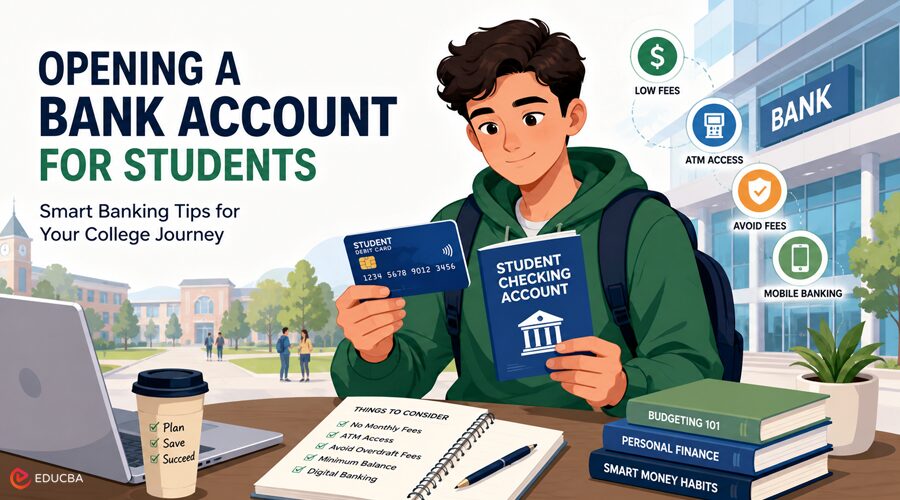
Heading off to college brings a rush of independence. Suddenly, your schedule, your meals, and your money rest entirely in your own hands. Managing cash for the first time takes genuine practice. Young adults often feel overwhelmed when looking at banking options. However, opening a bank account for students involves more than simply choosing the first bank that offers a free giveaway on campus. Understanding account fees, ATM access, overdraft policies, and balance requirements can help students avoid unnecessary costs and build healthy financial habits from the start. Before opening an account, review the following factors to help ensure it aligns with your financial needs and goals.
Essential Factors to Evaluate When Opening a Bank Account for Students
The right bank account can make managing money much easier during college. Consider the following factors before making your decision.
1. Choose Student Accounts That Waive Monthly Fees Until You Turn 24 or Graduate
Regular banking products often come with expensive strings attached. They want you to keep a certain amount of cash untouched or pay them a maintenance fee just to hold your money. Finding the right checking account for students will solve this problem instantly. Financial institutions know cash gets tight between semesters. They create special packages tailored for younger adults that simply drop these standard fees entirely. You want to look for platforms that put your financial health first without making you jump through unnecessary hoops. A modern option like SoFi offers intuitive tools to help young adults manage money more easily. Their systems are built for seamless digital access. This makes it incredibly simple to track spending right from your phone.
2. Check ATM Locations Near Campus, Bars, and Your Part-Time Job
Digital payments rule supreme right now. Yet physical cash remains necessary for splitting rent with roommates and buying used textbooks. Out-of-network withdrawal fees stack up fast. Look up the exact locations of affiliated cash machines before committing. Verify there is one right next to your dorm building. Check if one exists near your part-time job.
3. Say No to Overdraft Protection
Banks offer a feature that sounds like a helpful safety net. They call it overdraft protection. If your balance hits zero, they cover your purchase and slap a massive fee on top. Decline this feature immediately. It turns a cheap coffee into a serious financial mistake. Have your debit card decline if funds run out instead. A negative balance causes real financial pain that can take weeks to fix.
4. Ask About Minimum Balances before Your First Student Loan Hits
Large deposits hit your balance at the start of the semester. That loan or grant money looks great initially. Then you pay tuition, buy books, and cover rent. Your balance drops drastically within a few short weeks. Confirm exactly what balance requirements apply when money gets critically low. The worst time to get hit with a minimum balance penalty is when you literally have no cash left. Proactively protect your lowest-balance days by choosing a product with no minimum balance requirement.
5. Keep Your Hometown Credit Union Account for Summer Breaks
Moving away for school does not mean severing all financial ties back home. Many local credit unions offer genuine customer care that massive national banks cannot match. Leave a small cushion of cash in your hometown account. When you head back for a seasonal job, having a local branch makes cashing physical paychecks effortless.
Final Thoughts
Opening a bank account for students is an important step toward financial independence. Selecting the right bank account can help you minimize fees, access cash easily, and manage your finances more effectively throughout your college years. By comparing student-specific features, reviewing overdraft policies, checking ATM availability, and understanding balance requirements, students can select an account that supports both their academic journey and long-term financial success.
Recommended Articles
We hope this comprehensive guide to opening a bank account for students helps you navigate your banking options with confidence. Explore these recommended articles for additional financial tips and strategies to support your college journey.

