
What is Quiet Quitting?
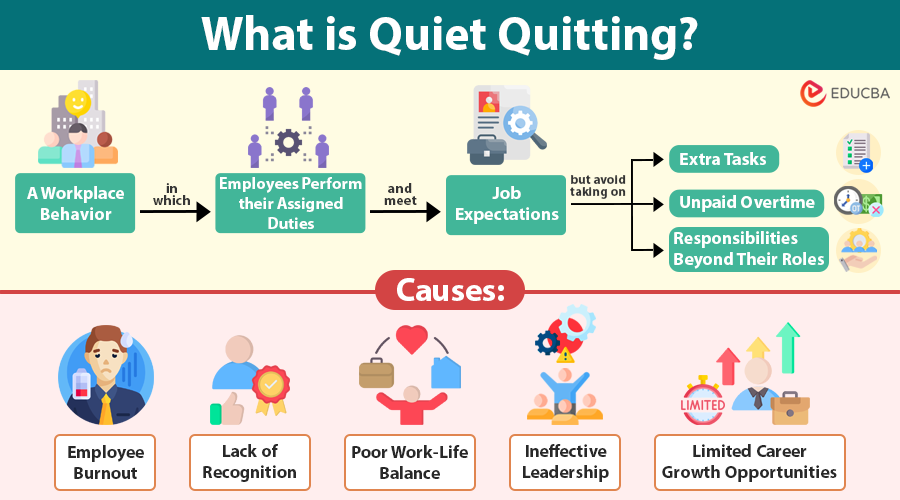
Quiet Quitting is a workplace behavior in which employees perform their assigned duties and meet job expectations but avoid taking on extra tasks, unpaid overtime, or responsibilities beyond their roles.
Employees who practice quiet quitting focus on fulfilling their contractual obligations while maintaining clear boundaries between work and personal life. For example, they may complete all assigned work during office hours but choose not to respond to work emails after hours or volunteer for additional projects outside their responsibilities.
Table of Contents:
- Meaning
- Why is it Called Quiet Quitting?
- Key Characteristics
- Causes
- Signs of Quiet Quitting in the Workplace
- Benefits
- Challenges
- Real-World Example
- How Can Organizations Address Quiet Quitting?
Key Takeaways:
- Quiet quitting involves meeting job expectations while avoiding extra responsibilities beyond agreed workplace duties.
- It can improve employee well-being and boundaries but may reduce engagement, collaboration, and innovation.
- Organizations can address quiet quitting through recognition, leadership improvement, feedback, and career development.
- Creating supportive workplace cultures helps maintain motivation, productivity, employee satisfaction, and retention.
Why is it Called Quiet Quitting?
The phrase became popular because employees gradually reduce discretionary effort without formally announcing their intentions. There is no resignation letter or public declaration.
The employee remains employed and performs required duties but quietly withdraws from the following:
- Voluntary overtime
- Extra responsibilities
- Unpaid work
- Constant availability
- Non-essential workplace activities
As a result, the employee continues working while maintaining stricter professional boundaries.
Key Characteristics of Quiet Quitting
Several behaviors commonly indicate quiet quitting.
1. Performing Only Assigned Duties
Employees focus exclusively on the responsibilities outlined in their job descriptions, ensuring expectations are met without taking on extra tasks.
2. Avoiding Unpaid Overtime
Workers complete duties during scheduled hours and avoid extending work time unless additional compensation is provided.
3. Establishing Work-Life Boundaries
Employees prioritize personal well-being, family commitments, and leisure activities by maintaining clear separation from work.
4. Reduced Workplace Engagement
Participation in voluntary meetings, social events, and nonessential initiatives decreases as employees conserve energy.
5. Limiting After-Hours Communication
Employees avoid responding to work emails, calls, or messages during personal time to protect their boundaries.
6. Declining Additional Responsibilities
Workers refuse tasks beyond their roles when extra effort is neither recognized nor rewarded.
Causes of Quiet Quitting
Several workplace factors contribute to the rise of quiet quitting.
1. Employee Burnout
Long working hours, excessive workloads, and constant pressure can lead to physical and mental exhaustion. Employees may reduce discretionary effort to protect their well-being.
2. Lack of Recognition
Employees may become demotivated to go above and beyond the call of duty if they believe their efforts are unappreciated or unrewarded.
3. Poor Work-Life Balance
Employees increasingly value personal time and family commitments. Excessive work demands can encourage workers to establish stronger boundaries.
4. Ineffective Leadership
Poor communication, lack of support, and inadequate management practices can decrease employee engagement.
5. Limited Career Growth Opportunities
Workers who see little opportunity for advancement may feel less motivated to invest additional effort.
Signs of Quiet Quitting in the Workplace
Organizations can identify quiet quitting through various behavioral indicators.
Employee-Level Signs:
1. Reduced Enthusiasm for Projects
Employees show less interest, motivation, and excitement when regularly participating in work-related projects.
2. Minimal Participation During Meetings
Workers contribute fewer ideas, comments, or suggestions during discussions and team meetings.
3. Declining Willingness to Collaborate
Employees become less interested in teamwork, cooperation, and supporting colleagues on shared tasks.
4. Avoidance of Extra Assignments
Workers consistently decline additional responsibilities that extend beyond their required job duties.
5. Increased Focus on Work-Hour Limits
Employees strictly adhere to scheduled hours and avoid work beyond designated times.
Organizational Signs:
1. Lower Employee Engagement Scores
Survey results indicate declining motivation, satisfaction, commitment, and overall workplace engagement levels.
2. Increased Absenteeism
Employees take more unplanned leave, reflecting disengagement, dissatisfaction, or reduced workplace commitment.
3. Higher Turnover Rates
More employees are resigning, creating workforce instability and increasing recruitment and training costs.
4. Reduced Innovation
Teams generate fewer creative ideas, improvements, or solutions that support organizational growth.
5. Declining Team Morale
Workplace motivation weakens as employees experience lower enthusiasm, collaboration, and overall job satisfaction.
Recognizing these signs early allows organizations to address underlying concerns before they worsen.
Benefits of Quiet Quitting
Although often viewed negatively, quiet quitting can have certain benefits for employees and organizations.
1. Improved Work-Life Balance
Employees create healthier boundaries between work and personal life, allowing more time for family and well-being.
2. Reduced Burnout
Limiting excessive workloads helps employees maintain mental health, reduce stress, and sustain long-term productivity.
3. Increased Focus on Essential Tasks
Workers concentrate on primary responsibilities, improving efficiency and ensuring important tasks receive adequate attention.
4. Encourages Fair Work Practices
Quiet quitting exposes unrealistic expectations and encourages organizations to distribute workloads more fairly among employees.
5. Better Boundary Setting
Employees communicate professional limits clearly, helping manage expectations while protecting personal time and energy.
Challenges of Quiet Quitting
Despite potential benefits, quiet quitting can create difficulties for organizations.
1. Reduced Productivity
When employees limit effort to required tasks, overall team productivity may decline, affecting project completion and performance.
2. Lower Innovation
Disengaged employees contribute fewer creative ideas, reducing innovation, problem-solving capabilities, and opportunities for organizational improvement.
3. Weak Team Collaboration
Reduced willingness to assist colleagues can weaken teamwork, communication, and cooperation across departments and project groups.
4. Impact on Organizational Culture
Widespread disengagement may lower morale, decrease motivation, and create a less positive and connected workplace environment.
5. Increased Turnover Risk
Quiet quitting often reflects underlying dissatisfaction, increasing the likelihood that employees will eventually seek opportunities elsewhere.
Real-World Example
Imagine a software developer who previously worked late nights, answered messages during weekends, and frequently volunteered for additional projects.
After experiencing burnout and receiving limited recognition, the developer decides to:
- Work only scheduled hours
- Complete assigned tasks
- Avoid weekend communication
- Decline unrelated projects
The developer continues meeting performance expectations but no longer provides discretionary effort. This behavior represents quiet quitting.
How Can Organizations Address Quiet Quitting?
Employers can take proactive steps to improve engagement and reduce quiet quitting behaviors.
1. Recognize Employee Contributions
Regular appreciation and acknowledgment make employees feel valued, increasing motivation, engagement, and workplace satisfaction.
2. Promote Work-Life Balance
Encouraging healthy boundaries and manageable workloads helps employees maintain well-being while remaining productive and engaged.
3. Strengthen Leadership Practices
Effective leaders communicate clearly, provide support, and build trust through consistent and transparent interactions.
4. Offer Career Development Opportunities
Training, mentoring, and advancement opportunities encourage growth, improve motivation, and strengthen employee commitment.
5. Encourage Employee Feedback
Actively listening to employee concerns and suggestions fosters trust, engagement, and continuous workplace improvement.
Final Thoughts
Quiet quitting is the practice of performing only assigned job responsibilities while maintaining healthy work boundaries. Often driven by burnout, lack of recognition, and poor work-life balance, it can improve employee well-being but may reduce engagement and innovation. Understanding this trend helps organizations create supportive workplaces that encourage both productivity and employee satisfaction.
Frequently Asked Questions (FAQs)
Q1. Is quiet quitting the same as resigning from a job?
Answer: No. Quiet quitting means employees continue working but limit their efforts to their required responsibilities.
Q2. Is quiet quitting harmful to organizations?
Answer: It can reduce engagement and innovation, but it may also highlight workplace issues that need attention.
Q3. How can companies reduce quiet quitting?
Answer: Organizations can improve recognition, communication, leadership quality, career development, and work-life balance initiatives.
Q4. Is setting work boundaries considered quiet quitting?
Answer: Not necessarily. Healthy boundaries can be a positive practice that supports employee well-being while maintaining productivity.
Recommended Articles
We hope that this EDUCBA information on “Quiet Quitting” was beneficial to you. You can view EDUCBA’s recommended articles for more information.


