


What is an Informal Economy?
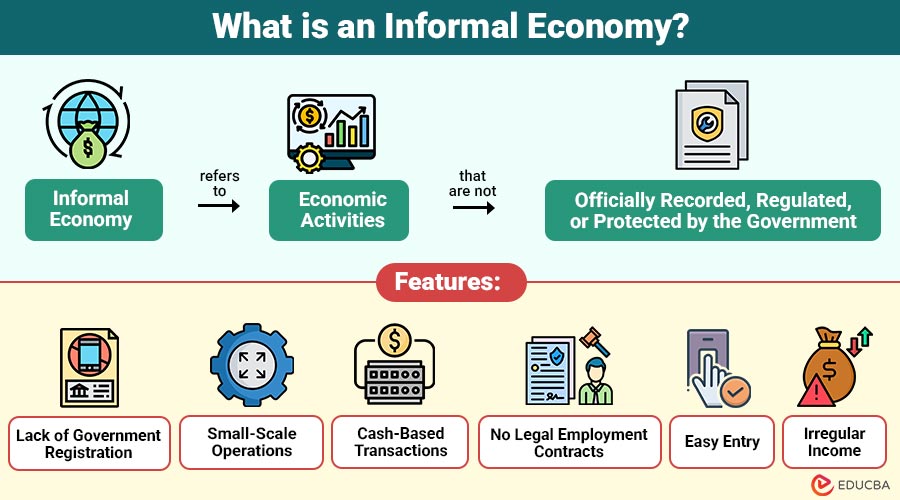
An informal economy refers to economic activities that are not officially recorded, regulated, or protected by the government. These activities may be legal in nature, but they operate without proper registration, licenses, or tax reporting.
People working in the informal economy usually:
- Do not have formal work contracts
- Receive irregular or cash-based payments
- Lack of social security and healthcare benefits
- Work in small-scale or self-employed businesses
- Operate outside labor laws and taxation systems
The informal economy exists in both urban and rural areas and supports millions of households worldwide.
Table of Contents:
- Meaning
- Features
- Types
- Working
- Advantages
- Causes
- Example
- Difference
- Measures to Improve the Informal Economy
Key Takeaways:
- The informal economy provides income opportunities through small-scale, unregistered, cash-based business and employment activities.
- Informal workers often lack job security, healthcare benefits, legal protection, and stable sources of income.
- Poverty, unemployment, complex regulations, and limited education commonly contribute to growth of the informal economy.
- Simplified regulations, social protection, digital payments, and skill development can improve the conditions of informal workers.
Features of the Informal Economy
Given below are the main features:
1. Lack of Government Registration
Most informal businesses are not officially registered with government authorities or tax departments.
2. Small-Scale Operations
Informal activities are usually carried out by individuals, families, or very small businesses with limited capital.
3. Cash-Based Transactions
Payments are commonly made in cash without official invoices or digital records.
4. No Legal Employment Contracts
Workers often work without written agreements, fixed salaries, or job security.
5. Easy Entry
People can enter informal work with minimal investment, skill requirements, or paperwork.
6. Irregular Income
Earnings in the informal economy may fluctuate daily or seasonally depending on market demand.
Types of Informal Economy
Here are the common types of activities found in the informal economy.
1. Street Trading
Street vendors sell food, clothes, electronics, fruits, and other products in public places.
2. Daily Wage Labor
Construction workers, loaders, drivers, and agricultural laborers often work on a daily payment system.
3. Domestic Work
Housemaids, cooks, babysitters, and cleaners commonly work informally in households.
4. Home-Based Businesses
Many people produce handicrafts, food items, tailoring products, or small goods from home.
5. Informal Transportation
Auto-rickshaw drivers, bike taxi operators, and unregistered transport services form part of the informal sector.
6. Freelancing and Gig Work
Some freelance workers and gig workers operate informally without contracts or tax registration.
How Does the Informal Economy Work?
The informal economy works through unregistered business activities and direct transactions between buyers and sellers. Workers usually earn income through small services, temporary jobs, or self-employment.
For example:
- A street vendor purchases goods from wholesalers.
- The vendor sells products directly to customers.
- Payments are often received in cash.
- No official tax records or formal invoices may be maintained.
Similarly, a daily wage worker may receive payment directly from an employer without any official employment documentation.
The informal economy survives because it provides affordable goods and services while creating income opportunities for people who cannot access formal jobs.
Advantages of the Informal Economy
Here are some major advantages.
1. Creates Employment Opportunities
The informal sector employs millions of people, especially low-skilled workers and migrants.
2. Supports Low-Income Families
Informal work helps households earn income even when formal employment opportunities are limited.
3. Encourages Entrepreneurship
People can start small businesses with low investment and minimal legal procedures.
4. Provides Affordable Goods and Services
Informal businesses often sell products at lower prices, benefiting low-income consumers.
5. Helps Economic Survival
During economic crises or periods of unemployment, informal work becomes an important source of income.
6. Flexible Working Conditions
Many informal jobs offer flexible working hours and self-employment opportunities.
Disadvantages of the Informal Economy
Given below are some major disadvantages of the informal economy.
1. Lack of Job Security
Workers may easily lose their jobs because formal contracts and legal protections are absent.
2. No Social Benefits
Informal workers usually do not receive pensions, medical insurance, paid leave, or retirement benefits.
3. Unsafe Working Conditions
Many informal workers operate in environments lacking proper safety measures and labor standards.
4. Limited Access to Loans
Banks may hesitate to provide loans because informal businesses often lack official records.
5. Tax Revenue Loss
Governments lose potential tax revenue because many informal businesses are unregistered.
6. Risk of Exploitation
Workers may face unfair wages, long working hours, and poor treatment without legal protection.
Causes of the Informal Economy
Here are some common causes of the informal economy.
1. Unemployment
Limited formal job opportunities force people to seek informal work for survival.
2. Poverty
Low-income individuals may not be able to afford the costs of business registration or formal operations.
3. Complex Regulations
Complicated business laws and tax procedures encourage businesses to remain informal.
4. Lack of Education
Limited education and skills may reduce access to formal employment opportunities.
5. Rapid Urbanization
Migration to cities often increases informal employment due to a growing labor supply.
6. Weak Government Enforcement
Inadequate monitoring allows unregistered businesses to operate freely.
Example of Informal Economy
Below is a simple example of how the informal economy works in daily life.
A fruit vendor selling fruits on a roadside without a business license or tax registration is part of the informal economy.
The vendor:
- Buys fruits from wholesalers
- Sells directly to customers
- Receives cash payments
- Keeps limited or no official records
- Works without formal government registration
This type of small-scale business provides income but usually lacks legal protection and social benefits.
Difference Between Informal Economy and Formal Economy
The table below highlights the main differences between the informal and formal economies.
| Basis | Informal Economy | Formal Economy |
| Registration | Usually unregistered | Officially registered |
| Taxation | Limited or no taxes | Subject to taxation |
| Job Security | Low | Higher |
| Employment Contracts | Rare | Common |
| Social Benefits | Usually unavailable | Provided |
| Business Size | Mostly small-scale | Small to large-scale |
| Government Regulation | Limited | Strongly regulated |
| Record Keeping | Minimal | Proper financial records |
Measures to Improve the Informal Economy
Here are some important measures to improve the informal economy.
1. Simplify Business Registration
Easy registration processes encourage small businesses to become formal.
2. Improve Access to Finance
Providing small loans and banking support can help informal businesses grow.
3. Increase Skill Development
Training programs improve employment opportunities and productivity.
4. Expand Social Protection
Governments can provide healthcare, insurance, and pension schemes for informal workers.
5. Promote Digital Payments
Digital transactions improve financial inclusion and transparency.
6. Create Employment Opportunities
Strong economic growth and industrial development can reduce dependence on informal work.
Final Thoughts
The informal economy creates jobs, supports small businesses, and helps millions earn income, especially in developing countries. However, workers often face low wages, unsafe conditions, and limited legal protection. Better education, financial access, social security, and simpler regulations can improve worker opportunities while supporting economic growth and long-term sustainable development.
Frequently Asked Questions (FAQs)
Q1. Why do many people work in the informal economy?
Answer: People often join the informal economy because of unemployment, poverty, limited education, or difficulties accessing formal jobs and business opportunities.
Q2. Is the informal economy legal?
Answer: Many informal activities are legal, but they operate without proper registration, licenses, tax reporting, or labor law compliance.
Q3. How can governments improve conditions for informal workers?
Answer: Governments can simplify business registration, provide social protection, improve access to finance, offer skill training, and encourage digital payments.
Recommended Articles
We hope that this EDUCBA information on “Informal Economy” was beneficial to you. You can view EDUCBA’s recommended articles for more information.


