
What is Liquidity Crunch?
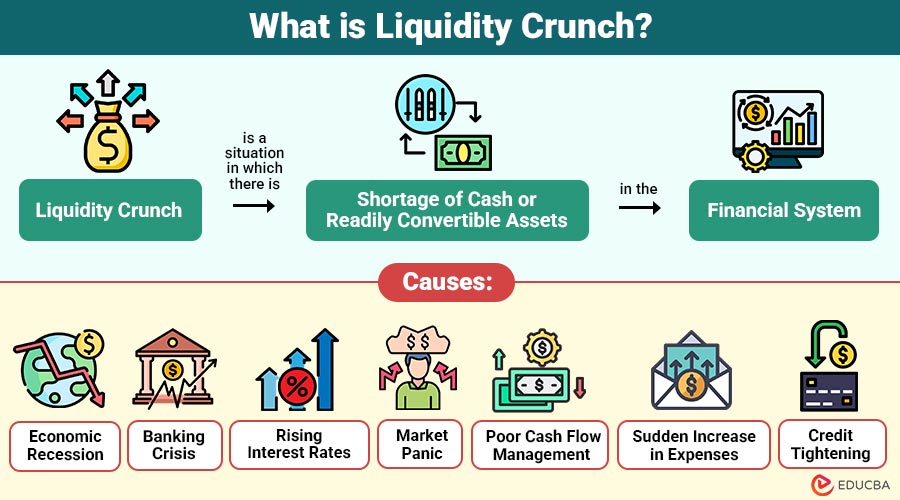
A liquidity crunch is a situation in which there is a shortage of cash or readily convertible assets in the financial system. During this period, borrowing money becomes difficult because lenders become cautious and financial institutions reduce lending activities.
In simple words, a liquidity crunch happens when money stops flowing smoothly through the economy.
For example, a company may have large amounts of inventory or property but may not have enough cash to pay immediate bills. Similarly, banks may hold long-term investments but lack sufficient cash to meet customer withdrawal demands.
Table of Contents:
- Meaning
- Causes
- Working
- Signs
- Effects
- Examples
- How can Businesses Manage a Liquidity Crunch?
- Advantages
- Disadvantages
Key Takeaways:
- Liquidity crunch reduces cash availability, making borrowing difficult for businesses, banks, and consumers everywhere.
- Economic recessions, rising interest rates, banking crises, and market panic commonly trigger liquidity shortages.
- Liquidity crunches can cause business failures, unemployment, reduced investments, and widespread financial market instability.
- Emergency reserves, diversified funding, and strong cash management help businesses survive liquidity-related financial crises.
Causes of Liquidity Crunch
Several factors can lead to a liquidity crunch in the economy or within a business.
1. Economic Recession
During an economic slowdown, businesses earn lower revenues, investors become cautious, and banks reduce lending activities. This reduces cash flow across the market.
2. Banking Crisis
If banks face financial problems, they may stop lending money to businesses and consumers. This creates a shortage of available funds.
3. Rising Interest Rates
Higher interest rates increase borrowing costs. Businesses and individuals may avoid taking loans, leading to reduced market liquidity.
4. Market Panic
Fear among investors can trigger massive withdrawals of funds or the selling of assets. Financial institutions may then face cash shortages.
5. Poor Cash Flow Management
Companies with weak financial planning may run out of cash even if they are profitable on paper.
6. Sudden Increase in Expenses
Unexpected costs such as legal expenses, economic shocks, or supply chain disruptions can create liquidity problems.
7. Credit Tightening
Businesses may find it more difficult to get loans if banks and other financial institutions enforce stricter lending regulations.
How a Liquidity Crunch Works?
A liquidity crunch usually develops in stages:
Step 1: Reduction in Available Cash
Banks, investors, or businesses begin holding cash instead of lending or investing it.
Step 2: Borrowing Becomes Difficult
Loans become expensive or unavailable. Businesses struggle to obtain working capital.
Step 3: Spending Slows Down
Consumers and companies reduce spending to conserve cash.
Step 4: Financial Stress Increases
Businesses may delay salaries, supplier payments, or expansion plans.
Step 5: Economic Slowdown
Reduced spending and lending can slow down the overall economy.
Signs of a Liquidity Crunch
The following indicators may signal a liquidity crunch:
1. Increase in Borrowing Costs
Banks and lenders raise interest rates, making loans expensive and reducing access to short-term business financing.
2. Reduction in Bank Lending
Financial institutions tighten credit standards, limiting loan approvals and reducing available funds for businesses and consumers.
3. Delayed Payments by Businesses
Companies postpone supplier or employee payments due to insufficient cash flow and deteriorating financial liquidity.
4. Falling Stock Market Confidence
Investors lose confidence, causing stock prices to decline rapidly and increasing overall market financial instability.
5. Increased Loan Defaults
Borrowers fail to repay loans on time, creating financial pressure on banks and lending institutions worldwide.
6. Cash Flow Shortages
Businesses struggle to manage daily expenses because incoming cash falls short of operational financial requirements.
7. Decline in investments
Investors reduce spending and avoid risky assets amid uncertainty and limited market liquidity.
8. Panic Withdrawals from Banks or Funds
Customers rapidly withdraw deposits, fearing financial instability, creating severe liquidity pressure on banking institutions.
Effects of Liquidity Crunch
A liquidity crunch can create serious financial and economic problems.
1. Business Closures
Companies unable to access sufficient cash may temporarily suspend operations or permanently shut down operations.
2. Unemployment
Businesses facing severe financial pressure may reduce their workforce, delay recruitment, or freeze hiring activities entirely.
3. Reduced Investments
Investors avoid high-risk investments during uncertain economic conditions, significantly slowing innovation, expansion, and overall business growth.
4. Banking Problems
Banks experience financial stress when borrowers fail to repay loans, increasing the risks of defaults and instability.
5. Lower Consumer Spending
Consumers reduce unnecessary spending during financial uncertainty, negatively affecting businesses and overall market demand.
6. Stock Market Decline
Investors may sell shares rapidly due to fear, causing volatility and significant declines in stock markets.
7. Global Economic Impact
Major liquidity crises can disrupt international trade, financial systems, and economic stability across multiple countries worldwide.
Examples of Liquidity Crunch
Below are some real-world examples that explain how liquidity crunches affect businesses, banks, and the overall economy.
1. Global Financial Crisis of 2008
One of the most famous examples of a liquidity crunch occurred during the 2008 financial crisis. Banks stopped lending money due to fears about mortgage-backed securities and potential financial losses. Businesses and consumers struggled to obtain loans, leading to a worldwide economic recession.
2. COVID-19 Pandemic
During the COVID-19 pandemic, many businesses experienced severe cash shortages due to lockdowns and reduced sales. Governments and central banks introduced financial support measures to improve liquidity.
3. Company-Level Liquidity Crunch
A company may experience liquidity issues if customers delay payments while expenses continue increasing. Even profitable firms can fail due to a lack of immediate cash.
How Can Businesses Manage a Liquidity Crunch?
Businesses can reduce the impact of liquidity shortages through proper financial planning.
1. Maintain Emergency Cash Reserves
Keeping emergency reserve funds helps businesses survive unexpected cash shortages and financial difficulties during crises.
2. Improve Cash Flow Management
Monitoring receivables and payables carefully improves liquidity control and supports smooth daily business operations consistently.
3. Reduce Unnecessary Expenses
Businesses should postpone non-essential spending to preserve cash during uncertain economic and financial market conditions.
4. Diversify Funding Sources
Companies should secure multiple funding options rather than relying entirely on a single lender or investor.
5. Negotiate Payment Terms
Extending supplier payment deadlines can temporarily improve short-term cash flow and reduce immediate financial pressure.
6. Monitor Financial Ratios
Regularly tracking liquidity ratios helps businesses assess financial stability and identify potential cash-flow issues early.
Advantages of Liquidity Crunch
Below are the advantages of a liquidity crunch for businesses, which can help improve financial planning, discipline, and risk management.
1. Helps Businesses prepare Emergency Plans
Liquidity challenges prompt businesses to develop emergency strategies to manage unexpected financial crises and cash shortages effectively.
2. Encourages Better Cash Management
Businesses monitor expenses and cash flows carefully, improving financial planning and operational efficiency during uncertain periods.
3. Improves Financial Discipline
Companies become more disciplined in managing budgets, reducing wasteful spending, and consistently maintaining stronger financial stability.
4. Reduces Financial Risk Awareness
Liquidity shortages increase awareness of financial risks, encouraging businesses to adopt safer, more balanced financial practices.
5. Supports Smarter Investment Decisions
Investors and businesses evaluate opportunities carefully, leading to smarter investment decisions with reduced financial risks overall.
Disadvantages of Liquidity Crunch
Below are the major disadvantages of a liquidity crunch that affect businesses, investors, financial markets, and the overall economy.
1. Business Failures
Companies unable to access sufficient cash may shut down operations or permanently close their business activities.
2. Job losses
Businesses facing financial difficulties may reduce their workforce, causing significant unemployment and declining employee financial security.
3. Reduced economic growth
Lower spending and investment slow economic expansion, affecting businesses, industries, and overall national financial development.
4. Lower investor confidence
Investors lose confidence during liquidity shortages, reducing investment and significantly increasing fear worldwide.
5. Financial market instability
Liquidity problems create market volatility, banking stress, and uncertainty across financial institutions and investment sectors globally.
Final Thoughts
A liquidity crunch occurs when cash becomes difficult to access, creating financial pressure for businesses, banks, and individuals globally. It may result from economic crises, market panic, rising interest rates, or weak cash management practices. Liquidity shortages can cause unemployment, reduced investments, and business failures. Proper financial planning, emergency reserves, and diversified funding sources help reduce liquidity-related financial risks effectively.
Frequently Asked Questions (FAQs)
Q1. How does a liquidity crunch affect businesses?
Answer: Businesses may struggle to pay salaries, suppliers, and debts due to limited cash availability.
Q2. Is the liquidity crunch temporary?
Answer: In many cases, liquidity problems are temporary and can improve when market conditions stabilize.
Q3. How can companies avoid liquidity problems?
Answer: Companies can maintain emergency funds, improve cash flow management, and diversify funding sources to reduce liquidity risks.
Recommended Articles
We hope that this EDUCBA information on “Liquidity Crunch” was beneficial to you. You can view EDUCBA’s recommended articles for more information


